Category: Featured

  • The 2022 Brickyard Vintage Racing Invitational

    The 2022 Brickyard Vintage Racing Invitational

    While the Indianapolis Motor Speedway is most famous for hosting the Indianapolis 500, that doesn’t mean there aren’t other exciting events held at the track. One of which is the Brickyard Vintage Racing Invitational.

    First held in 2014, it’s an annual event put on by the Sportscar Vintage Racing Association. The 2022 event took place on June 18th and 19th and brought together hundreds of cars for an unforgettable weekend of racing. I had a chance to attend it for the first time, and I was not disappointed.

    Arriving at the track Sunday morning, I was greeted by the sound of American V-8s storming around the course. I knew immediately it was the place for me.

    A Chevy Corvette makes its way around the road course

    On Sunday, the pace car for the races was driven by Indy racing royalty and two-time Indianapolis 500 winner Al Unser, Jr.

    The Track

    The races took place on the Indianapolis Motor Speedway Road Course. The roughly 2.4-mile course uses part of the main oval, including the start/finish straight, which is run backward from the standard Indy 500 configuration. The Road Course goes inside the oval and features two long straights and plenty of sharp turns. It also features different configurations.

    A car takes the first turn of the course
    Advertisements

    Spectators have several options when watching the road races. Along with the grandstands, several hills provide a vantage point to corners on the track.
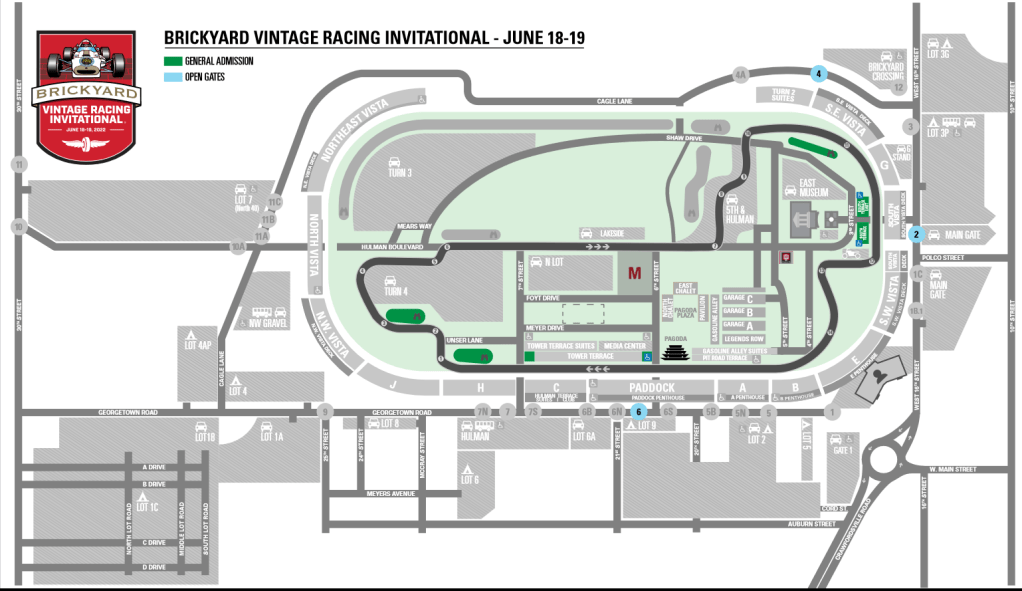
    Picture by the Indianapolis Motor Speedway

    Classic Indy Cars and “Ragtime Racers”

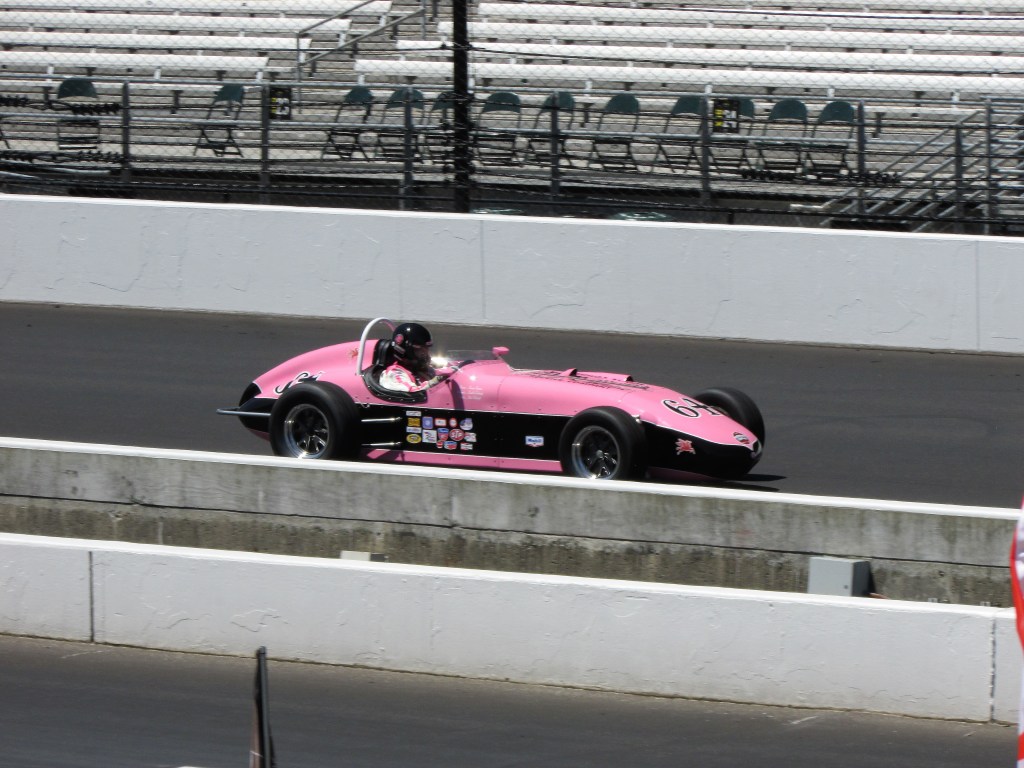
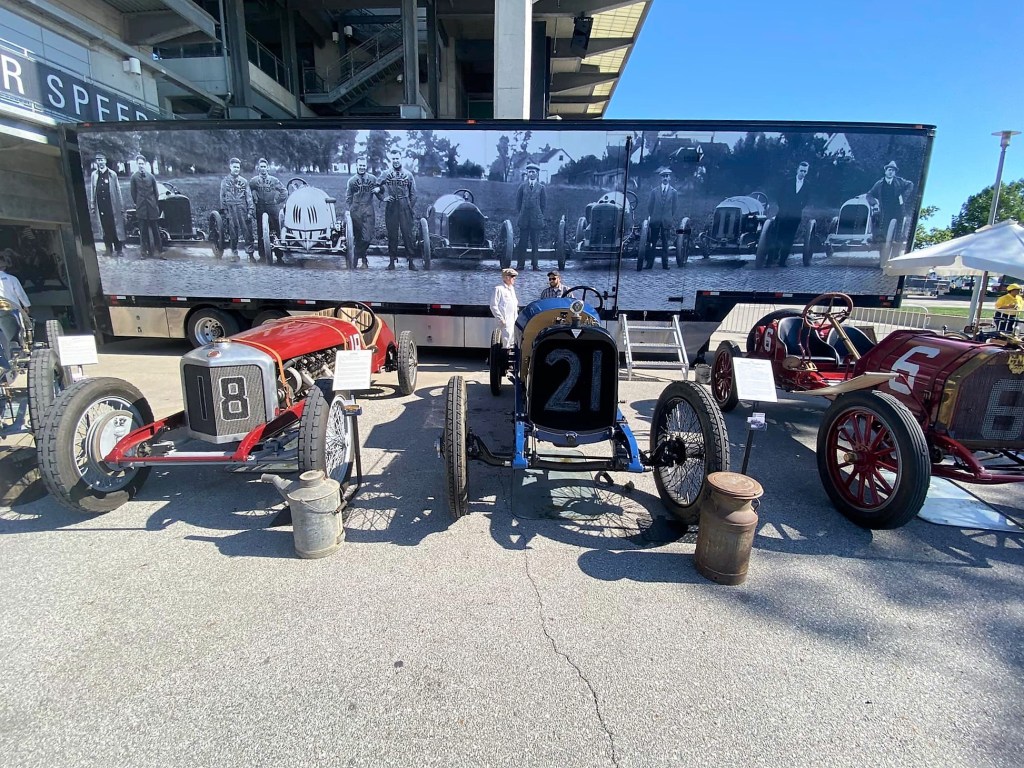
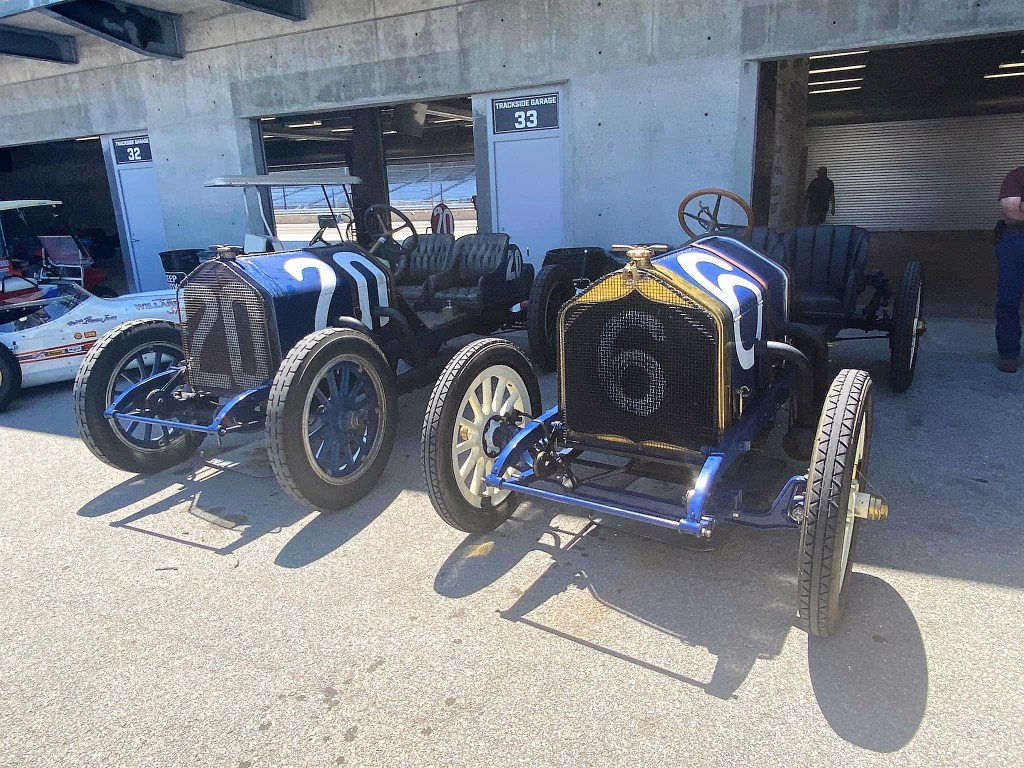
    Historic Indy cars and vintage race cars made exhibition laps around the track. The vintage race cars were brought by a group called “The Ragtime Racers.” Dressing in period-style clothes, they drive their antique machines on racetracks and at events around the country. Seeing the vintage cars on the track was an epic experience.

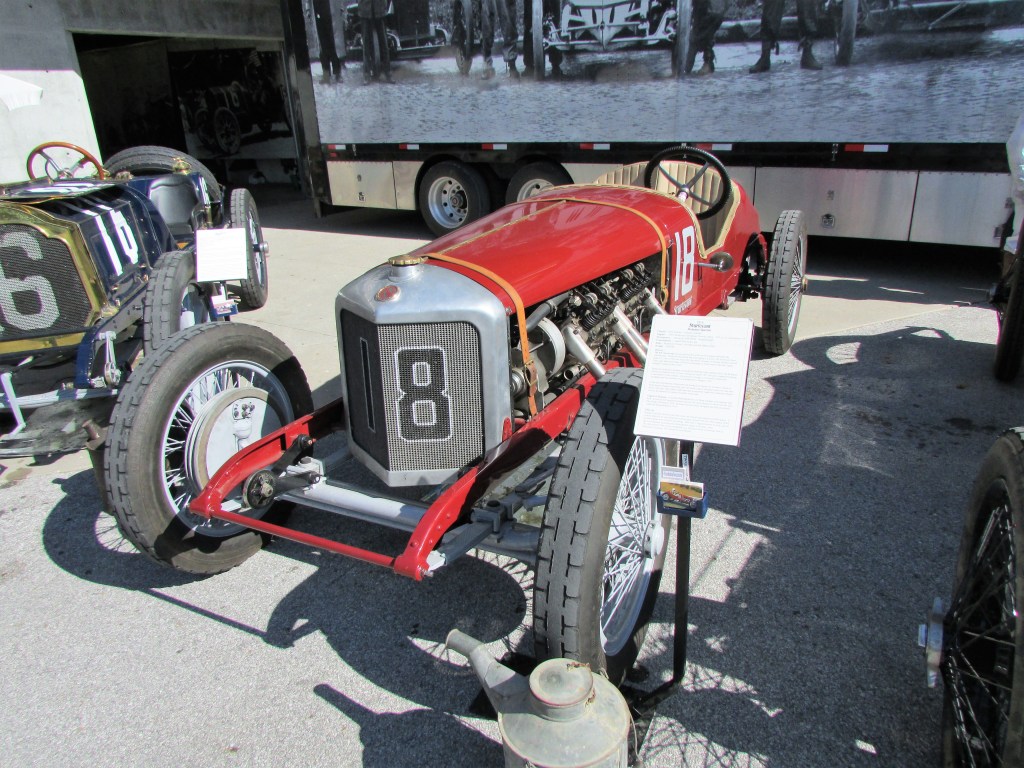
    A line of early 20th century racecars
    This 1916 racecar features an aluminum V-8 aircraft engine
    Advertisements

    It was amazing to see race cars that are not only over 100 years old but getting driven around a racetrack. Restoring these machines was undoubtedly a serious undertaking, and the old cliché about if walls (or, in this case, cars) could talk certainly holds true.
    Along with the vintage cars, there were a variety of mid-20th century IndyCars making exhibition laps. The ‘60s was a significant time for cars competing in the Indy 500. It heralded the phasing out of the front engine “roadsters” in favor of the modern mid-engine machines.
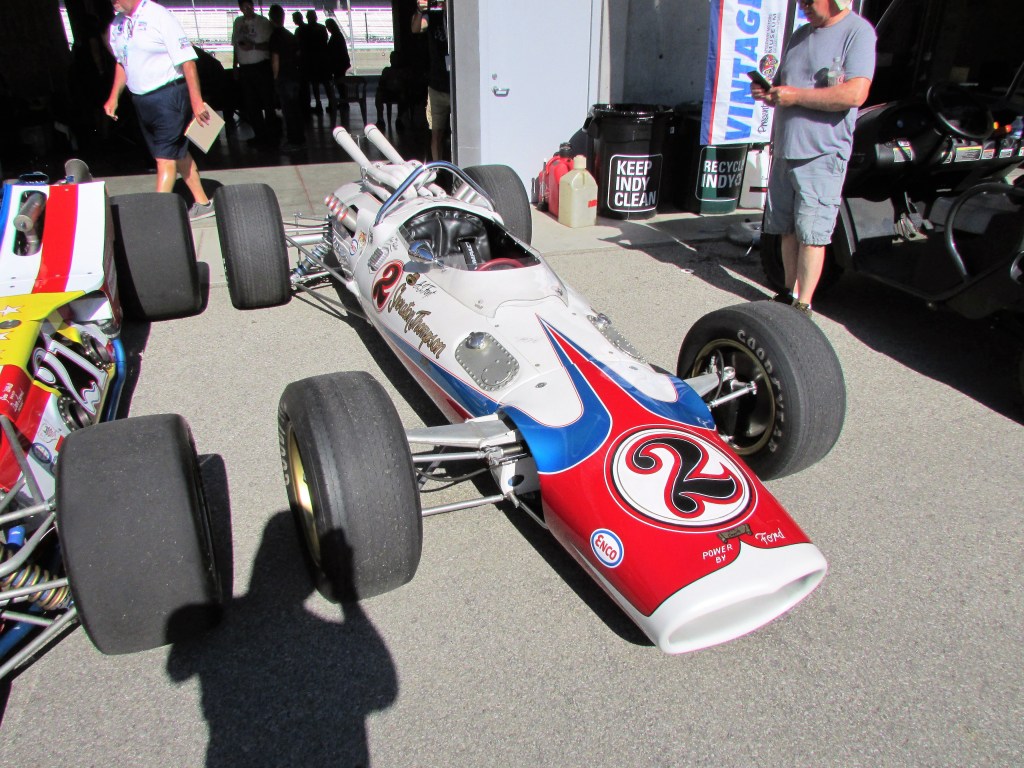
    A mid-engine car on display
    Plenty of racing history could be seen at the event

    In my opinion, the streamlined roadsters of that era were some of the most beautiful race cars ever made—their sleek design and traditional front-engine layout made for a stunning racecar.
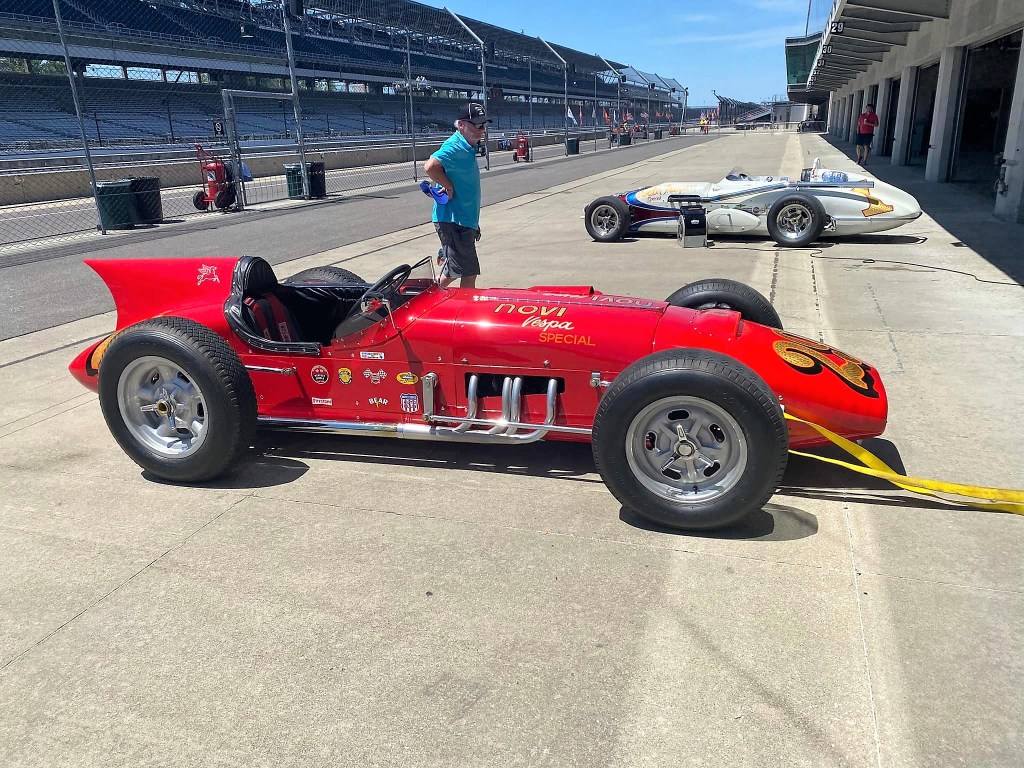
    Classic roadsters on display
    Advertisements

    The Races

    The cars racing ranged from American muscle to open-wheel racecars. The variety of cars at the event made for some unique on-track combinations. For example, open-wheel cars shared the track with sports cars; some races had cars with decades of difference in age.
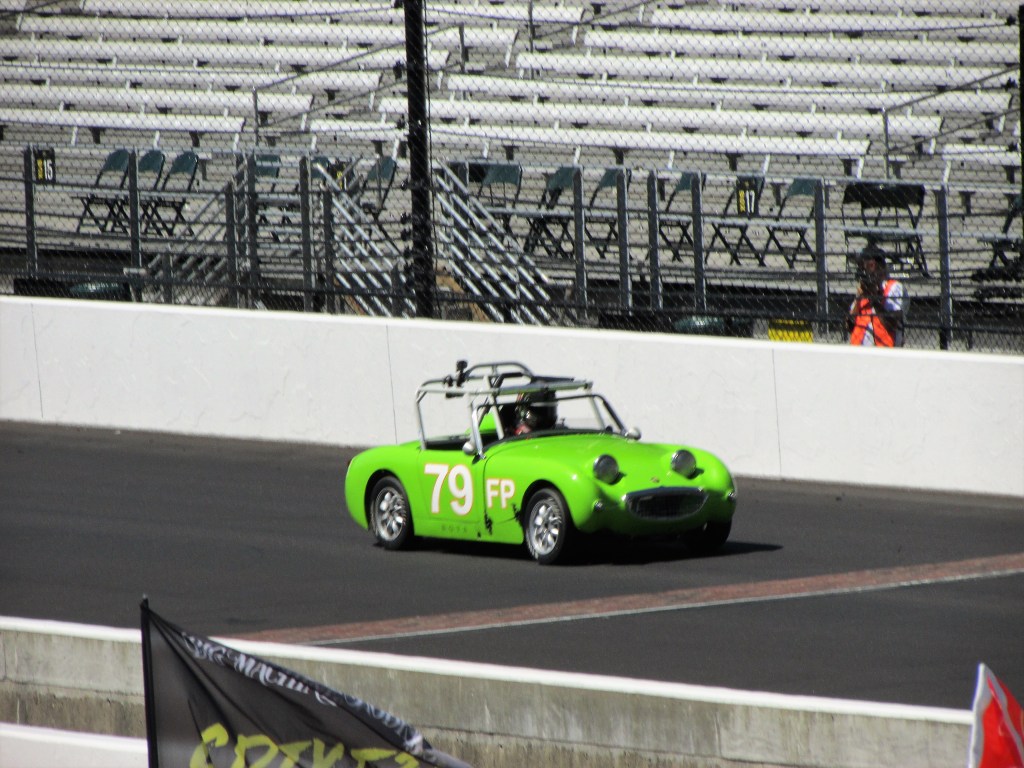
    An Austin Healy Sprite, an iconic British sports car, crosses the famous bricks.
    A classic MG heads down the front straight
    A classic Mercedes Benz heads down the track

    It was always fun to see what would come down the start/finish straight, the same front straight that just weeks before featured the cars of the Indianapolis 500.

    When I arrived at the track Sunday morning, the Group 6 cars were up. While the Group 6 class encompasses a range of cars, those racing today were American V-8-powered machines like Corvettes and Mustangs.

    Advertisements
    A classic Mustang charges down a straightaway
    It was fun seeing classic cars competing on the track

    It was a real thrill to hear the roar of the V8s and see the cars storm down a long straight.

    When it comes to heritage, the Formula Vee class has lots of it. Founded back in 1963, it features air-cooled VW-powered open-wheel race cars. The idea being it would be an affordable style of racing.
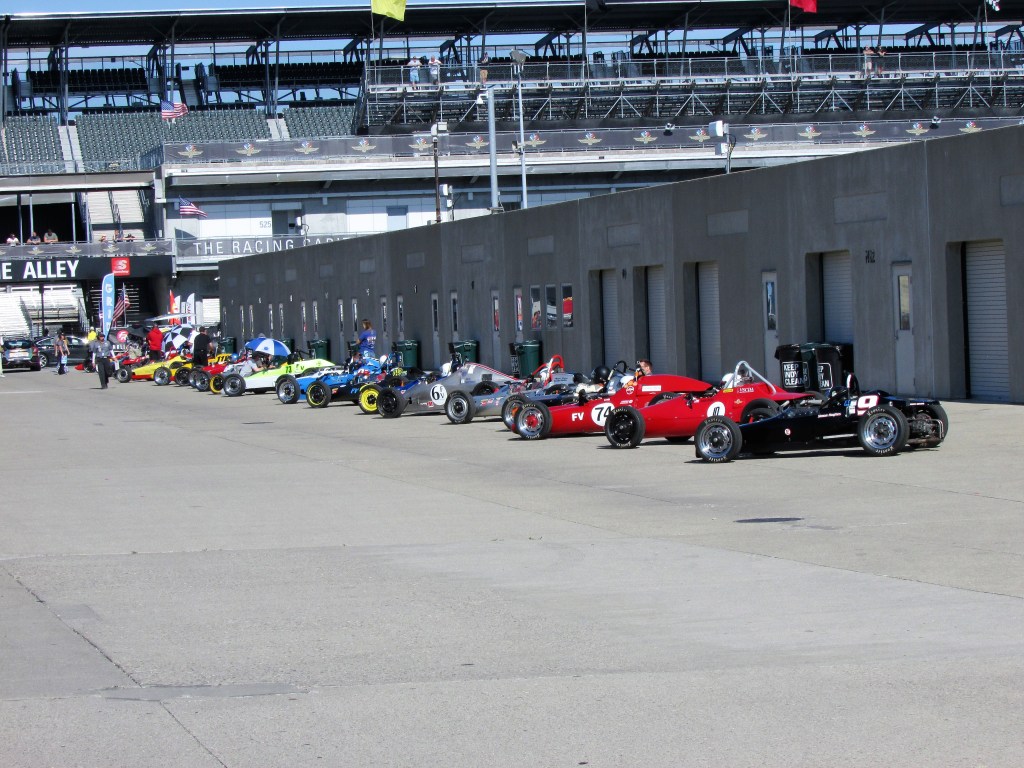
    Formula Vees getting ready to take to the track

    Not only was watching the Formula Vee cars on the track fun, but when the top drivers pulled up for the award ceremony after the race, they couldn’t contain their excitement. They looked like they had about the most fun you could have racing.

    A Formula Vee racecar waiting to race

    After the Formula Vee race, a man next to me told me the story of one of the cars in the winner’s circle. He had built that car decades ago at his in-laws but had stopped racing at age 79. It’s not every day you get a firsthand account of a racecar’s history.

    Later came the NASCARs, representing 20 years of cars, from 1987 to 2007. A NASCAR Pickup even competed.

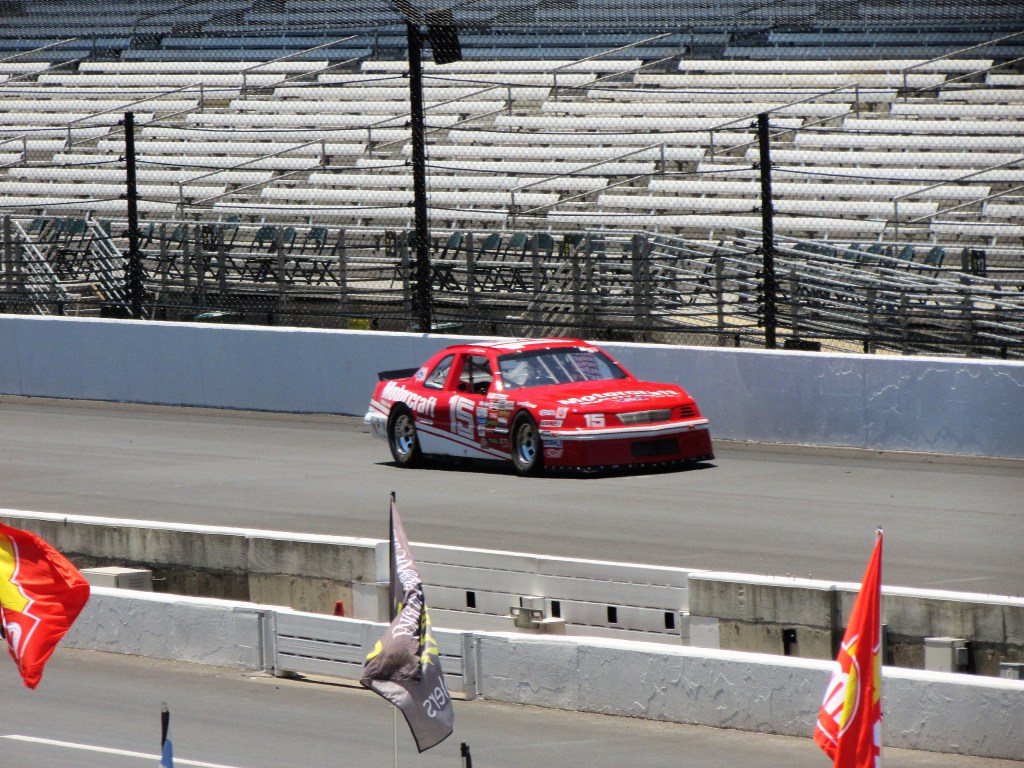
    Drivers preparing to take to the track
    Drivers coming across the start/finish line

    The winner, with a dominant lead, was professional NASCAR driver Joe Nemechek. Seeing him step out of his car up close in the winner’s circle was a definite highlight for me.
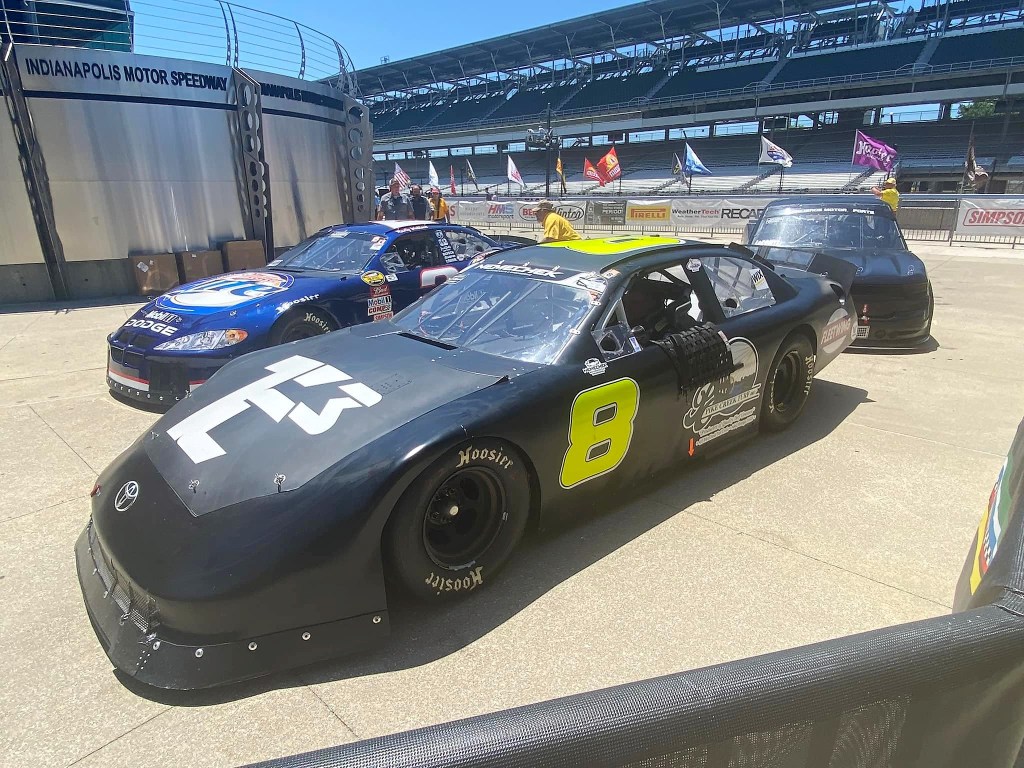
    Professional NASCAR driver Joe Nemechek in the winner’s circle.
    Advertisements

    The event produced some incredible sounds. The distinct tone of a classic Austin Healey Sprite barreling down the front straightaway of the Indianapolis Motor Speedway was an unforgettable experience, as was the collective rumble of a field full of NASCARs.

    Wrapping Up

    I’m looking forward to attending more vintage races. You never know what cars you might see. Looking for more on the Indianapolis Motor Speedway? Check out my blog post about the track and museum and my blog post about my first trip to the Indianapolis 500.

    The SVRA did an excellent job packing the event full of amazing racing. You can visit their website here. The Ragtime Racers did a great job bringing history to life on the track. Their website can be viewed here. Finally, you can see the Indianapolis Motor Speedway’s website at this link. Did you attend the Brickyard Vintage Racing Invitational? Let me know in the comments!

    8 responses to “The 2022 Brickyard Vintage Racing Invitational”

    1. Joe Rothpearl Avatar

      Very Cool!!! Feel like I was there with you. Thank you for bringing the show to me!

      Liked by 1 person

      1. Joe Avatar

        Thank you for checking it out! I’m glad you enjoyed it!

        Like

    2. John Cunningham Avatar
      John Cunningham

      Some great cars there at the Brickyard, Joe. What a great event to attend. Some of the older racers are reminiscent of the cars that raced on the old board tracks in the US. A racing genre I am fascinated with, ever since I found a book about this form of racing in my local public
      Library back in 1968. Intetesting to see the pic of a lime green Austin Healy Sprite. I had one of those back in the day. Not much power but because it was so low to the ground it gave a great illusion of speed. Although I now live in Ireland I grew up in Birmingham, England, where these little cars were made,at the Austin factory in the Longbridge area of the city.

      Liked by 1 person

    3. Joe Avatar

      It is always good to hear from you John. I had a great time at the races. I’ve always liked the Sprites. They look like they would be a lot of fun to drive.
      I actually went to Ireland for the first time a few months ago for a vacation. I loved every minute of it and cannot wait to go back.

      Like

      1. John cunningham Avatar
        John cunningham

        I’m glad that you made it to Ireland Joe. Hopefully you were able to get West of the Shannon, as we describe the West of Ireland. I live in County Mayo. As we gaze out over the Atlantic, it is often said that the next parish is in America.

        Like

        1. Joe Avatar

          I did make it west to Killarney and Galway. Unfortunately, I did not make it up to County Mayo on that trip. I really loved it. I enjoyed seeing the beautiful fields and rolling hills. I’m a fan of history, and seeing all the historical places was a great experience for me. I also couldn’t believe how nice everyone was. I definitely want to return. Also, if you’re on Facebook, I have a page I run along with the blog: https://www.facebook.com/Cars-and-Adventures-114543883430988 and also a group for it: https://www.facebook.com/groups/809044060066671

          Like

    4. John Cunningham Avatar
      John Cunningham

      Glad that you made it to Ireland Joe and enjoyed your time here.

      Liked by 1 person

    5. John Cunningham Avatar
      John Cunningham

      Not on facebook yet Joe. An old school resister…. But I’m thinking of starting a FB page so as to share my many pics of cars and my various road trips. I really enjoyed your FB posts. Some magical cars.. I will probably join the group once my posts look respectable.

      Like

    Leave a comment

    The March 2024 Texas Mile

    In March and October each year, people bring vehicles to the Texas Mile to see how fast they can go in a mile. The following is my account of the 2024 March event.


  • The National Automotive and Truck Museum

    The National Automotive and Truck Museum

    The National Automotive and Truck Museum, an impressive collection of cars and trucks, is located in Auburn, Indiana. It is an unassuming building neatly tucked away behind the Auburn Cord Duesenberg Museum. It could easily be missed if you were not paying attention. However, not going to The National Automotive and Truck Museum would be doing yourself a major disservice if you are already at the Auburn Cord Duesenberg Museum. It is a separate building, although you can get a Auburn Cord Duesenberg Museum/National Automotive and Truck Museum combo ticket if you want. It also includes one of the most valuable American vehicles ever made, but more on that later.
    Dodge Tomahawk
    The Dodge Tomahawk concept bike. Note the VIper V-10.

    Pre-war classics and a unique “barn” find.

    Once you get your ticket and leave the gift shop, you’ll come across a room chock-full of die-cast cars representing countless brands and models and a collection of pedal cars. Some of these antique pedal cars are nearly identical to their full-sized counterparts, many of which can be found in the Auburn Cord Duesenberg Museum across the parking lot. Just pass that room; you will find yourself in a large section filled with early 20th century cars. These cars include a 1935 Cord that goes far beyond what would be considered a typical “barn find.” It was buried for years and only dug up in the 1980s. Despite the effects of about 50 years, pressure, dirt, and water, the body is surprisingly intact, given the circumstances.
    A picture of a rare painted DeLorean.
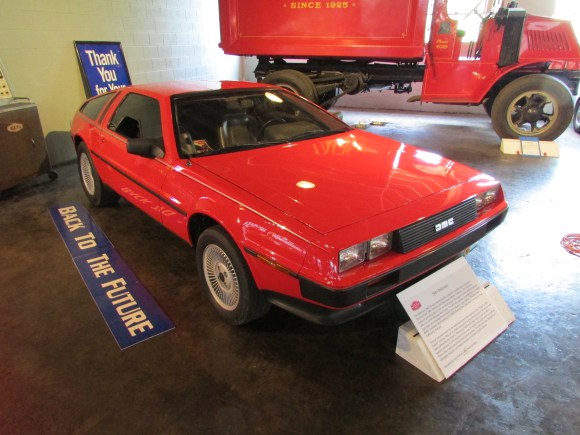
    A rare red DeLorean. It was part of a factory test to see how paint would work on the stainless steel body.

    The Car Room

    Exiting that room, you come upon the main room for the car section. It is filled with an incredible amount of variety, from the massive, iconic GM Futurliner, to the diminutive pre-war Austin 7. There’s the replica of the Essex Wire Shelby Cobra race car. There are also some interesting stories behind some of the cars. The 1981 DeLorean with a red paint job? As per the Museum, it was part of a test to see if the paint would work on the unconventional body. The red stands out as almost every DeLorean is the same unpainted stainless steel. The unassuming 1995 Ford Crown Victoria? It belonged to Hollywood Icon Katherine Hepburn. There’s also the legendary concept bike/quad, the Dodge Tomahawk. It is essentially a four-tire motorcycle powered by a Viper V-10 engine. As of writing, I’ve been to this Museum three times, and they keep the cars in rotation.

    A picture of a Futurliner.
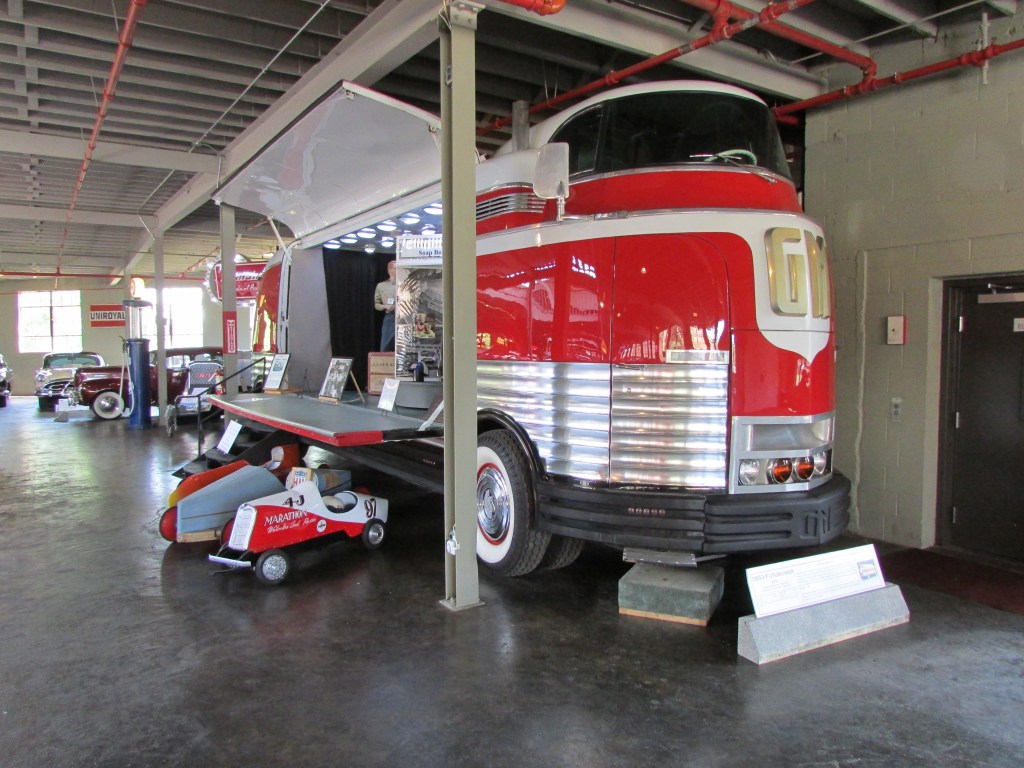
    The Futurliner, notice the central position of the driver.

    The Futurliner

    At the far edge of the room sits a 1940 GM Futurliner, one of just a handful made. These trucks, which look like an RV mixed with a semi truck toured the country showcasing new-for-the-time technology. They are roughly the size of a full-size RV or a city bus, and the fact that they don’t have side windows them look even larger. One side of the Futurliner opens to show the display, and lights extend up out of the roof, forming a sort of wordless marque. Interestingly, the driver sits in the middle and very high up. When looking up at the Futurliner from the front, it makes you appreciate just how high up the driver is. The engine sits forward, under the driver. Surprisingly, for a vehicle of that size, it does not have two rear axles common in modern city buses and RVs. Instead, it has eight wheels, two at each corner. The front bumpers follow the round front and back of the Futurliner and blend seamlessly into the sides of it. They also have a display example of the type of straight-6 that powered it. One of these sold at an auction for 4.1 million dollars. For a while, this was the most expensive American vehicle ever sold at an auction. You can learn more about the Futurliner on the website Futurliner.org.

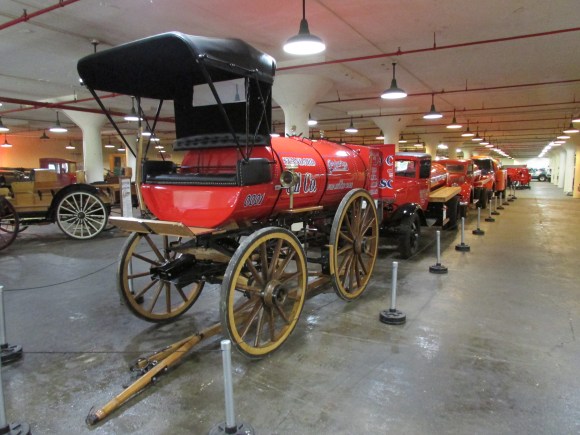
    A horse drawn fuel tanker.
    A horse drawn fuel tanker.

    The Truck Room

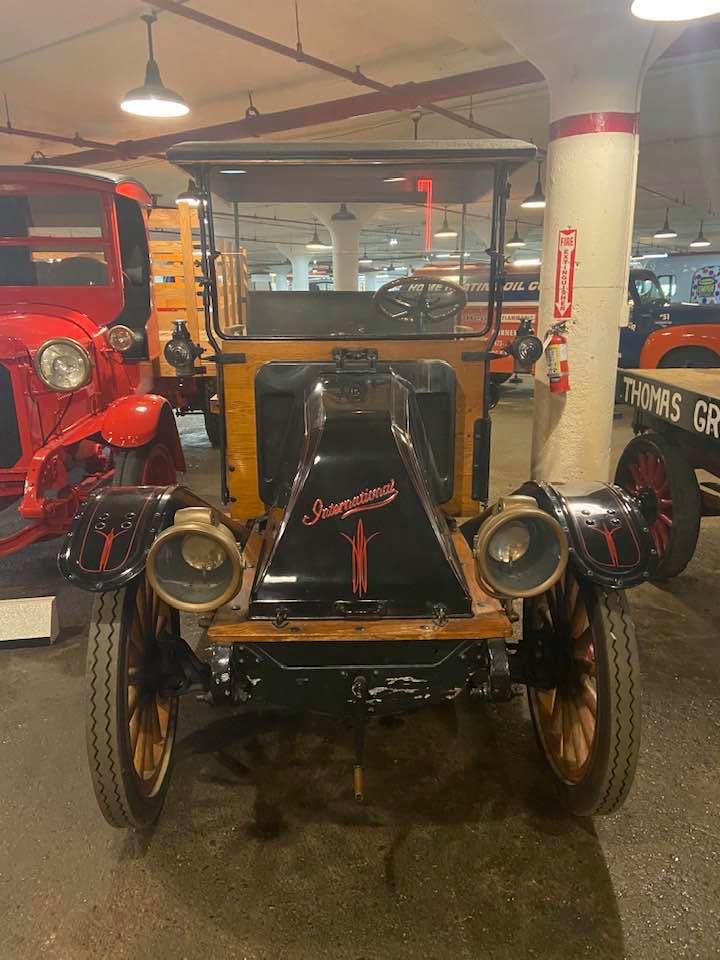
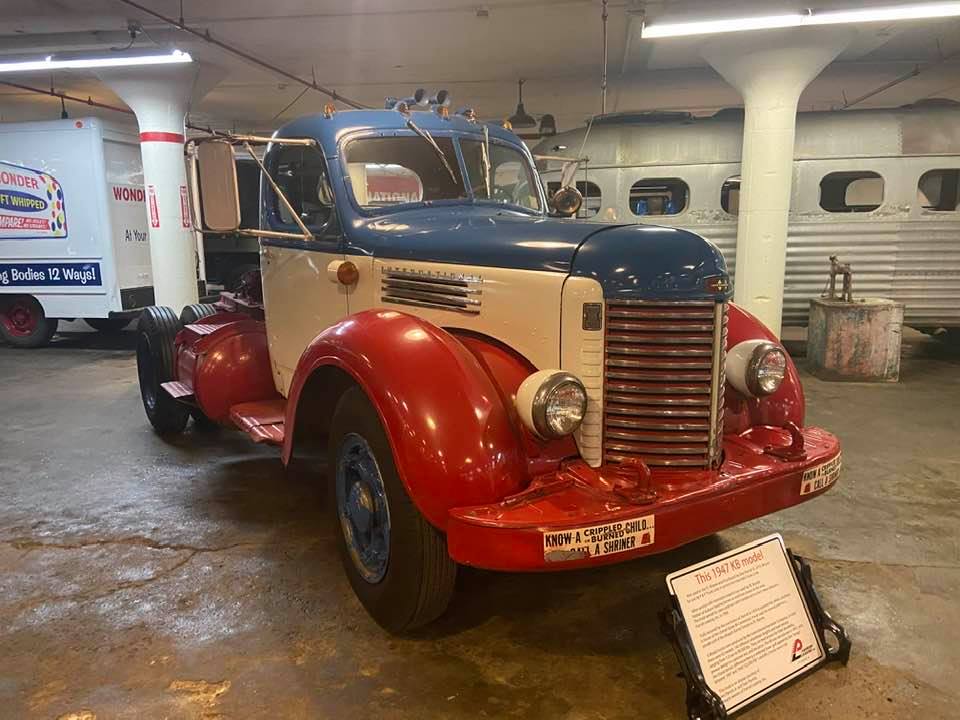
    The basement floor is the truck section, and it takes up almost every bit of space that the ground-floor car level does. It features over 100 years of personal and commercial trucks and even a land-speed record holder semi-truck that did well north of 200 mph. One of the things that immediately catch your attention is the row of fuel-haulers, in ascending order by age, starting with a horse-drawn one. The horse-drawn fuel-hauler is a perfect wordless metaphor for the transitional era of the early 20th century. Walking through the trucks, I was impressed by just how many early 20th century trucks there were, a chain final drive in place of a driveshaft is not an uncommon sight there. A cool thing about the trucks is that some of them come from the area. There is even a bus that was made in Auburn called a McIntyre. The 1911 model they have is far removed from what would constitute a modern bus: Three rows of seats and not a roof or window in sight, but it did what was made to do. Like the car floor above it, the truck section goes way beyond the Big Three, featuring brands like Studebaker and highlighting early examples of familiar truck brands like International.

    An antique truck.

    The Experience

    One of the great things about The National Automotive and Truck Museum is that you can take as much or as little time as you want. The Museum is divided up into several large rooms, and you don’t have to walk far to see it all, despite the size of the collection. However, time permitting, you may feel like digging deeper, reading the stories of the cars and trucks on their plaques, and checking out more of the extensive Futurliner exhibit. If you find yourself at The Auburn Cord Duesenberg Museum, the trip across the parking lot to this Museum is a worthwhile one. The Museum truly is a companion to the ACD Museum, as opposed to an afterthought. You can check out the Museum online at natmus.org. Also, you can view my blog about the Auburn Cord Duesenberg Museum here: https://carsandadventures.wordpress.com/2020/07/10/the-auburn-cord-duesenberg-museum/. I’ll be writing another blog about the final car museum I visited that day: The Early Ford V-8 Foundation Museum. Have you been to The National Automotive and Truck Museum? Let me know in the comments! As always, thanks for checking out my blog!

  • Elvis Presley’s Graceland

    Elvis Presley’s Graceland

    Earlier this year, on my way back to Louisiana, I got a chance to stop at Graceland, the fabled home of Elvis Presley. Located in Memphis, Tennessee, it has inspired more than one hit song and has been a tourist attraction for around 40 years. The area around it was a lot more remote when it was built in the ’30s. Not only have businesses like restaurants grown up around Graceland, but a neighborhood has as well.

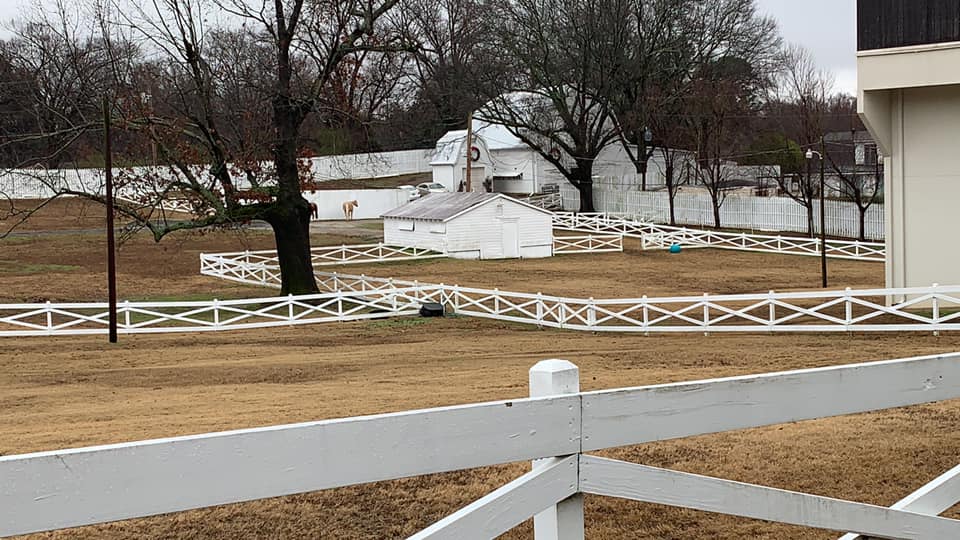
    The front of Elvis' Graceland, as viewed from the side.
    The front of Graceland, still decorated for Christmas.

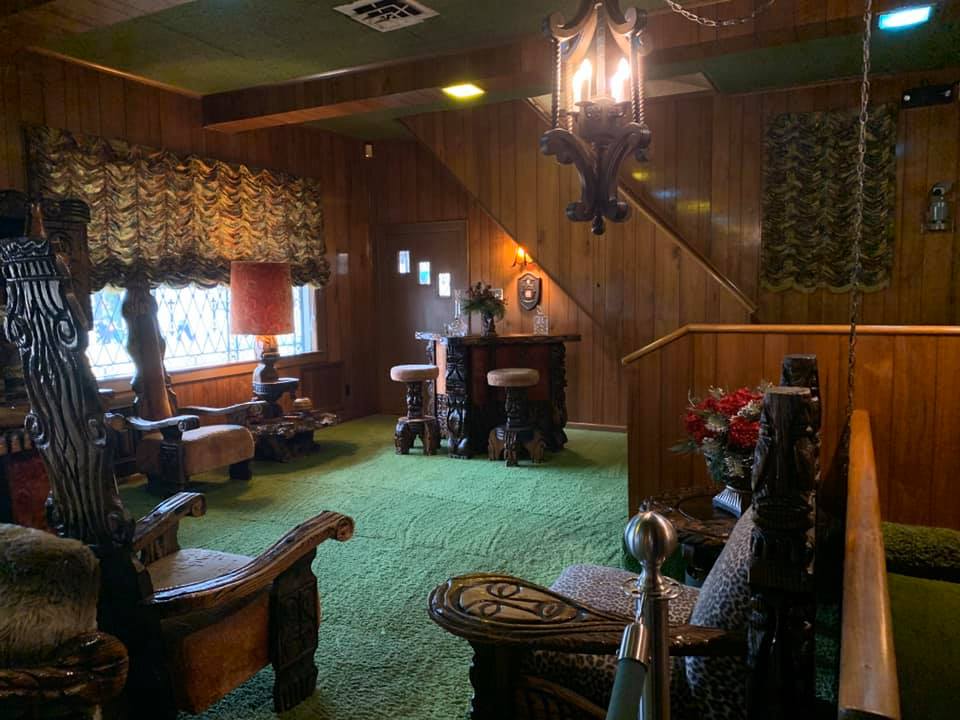
    After getting my ticket and being handed my iPad and earphones that I would use for the tour across the street, I rode the shuttle through the gates and up the massive, circular driveway. The house itself rests on a hill, adding to its mystic. The front of the house has elegant Roman columns. If you thought the driveway looked like it would make a good go-kart track, you aren’t alone. The iPad (with parts of the tour narrated by John Stamos) told us that Elvis used it as such. The house itself is good-sized, especially for the time period it was built, but the rooms themselves are more average-sized. The decoration of the rooms can only be described as extravagant. I went in January, so the front yard and house were still decorated for Christmas. The entrance was lined on both sides with Christmas trees. One of the rooms in the house had a beautiful white Christmas tree, which was very trendy during the 1970s. The dining room looked as if it was set for a Christmas dinner, the table was adorned with plates, and another Christmas tree sat at the far end. The tree was covered in ornaments and draped in tinsel. It had a stocking that read “Elvis.” The 2nd floor is off-limits, out of respect for Elvis and his family’s privacy. The first floor is where he received guests. The tour takes you through gorgeous rooms and into the very finished basement complete with three TVs, and eventually through the legendary jungle room. Like its namesake, the Jungle Room features large amounts of green, both on the ground and ceiling, plus plenty of plants. It is even mentioned by name in the hit song “Walking in Memphis.” In the large, hilly backyard horses graze, the same as when Elvis lived there. The last part of the tour is the small cemetery where Elvis and his parents are buried. It was very beautiful and peaceful. It is fitting that a celebrity who was so accessible to his fans, signing countless autographs, would have hundreds of thousands of visitors to his final resting place decades after his passing. After getting on the bus back to the visitor’s center, I felt like I knew Elvis, like he had me over to his house.

    Graceland's dining room table, set for a Christmas dinner, complete with a Christmas tree.
    The Dining room, set for a Christmas dinner.

    The whole Graceland attraction is massive, besides the house itself. There is a huge museum that goes beyond Elvis, a bar, a steakhouse, an ice cream shop and, a concert arena that frequently plays host to big-name acts. There is a lot to see and do just across the street. Many of Elvis’ cars, boats, motorcycles, and planes are on display as well. The cars alone take up multiple rooms. The planes were impressive to walk through, although you need to buy a separate ticket for it. I had never been in an airplane quite like his 1958 Convair 880 jet. It was interesting to be in an airliner-sized plane that was so personalized. There are many other displays about Elvis, including a detailed exhibit about his time in the military. There was a fascinating display about Sun Records, the groundbreaking record company Elvis was signed to early in his career. The Elvis satellite radio channel also broadcasts from Graceland. There was also an exhibit about celebrities who had been inspired by Elvis and features their clothes or costumes. The extensive list included, among others, Johnny Cash, Dwayne “The Rock” Johnson, and the band KISS. There is a lot to see and do, and it is definitely worth checking out, especially for fans of Elvis.

  • The Gilmore Car Museum

    The Gilmore Car Museum

    Recently I had a chance to go to the Gilmore Car Museum, just northwest of Kalamazoo, Michigan. Like many towns and cities in Michigan, it has strong ties to the automotive industry, and interestingly enough was the birthplace for Gibson guitars. Located on a farm out in the hilly countryside, the museum has been around for over 50 years and features over a hundred years of automotive history. The museum also plays host to car shows throughout the year. Its made up of 100s of cars as well as rotating displays.

    A Tucker Torpedo. The First one I’ve seen in person.

    The first room was an exhibit dedicated to women’s impact on cars. I was greeted by a Tucker 48, a highly advanced and incredibly rare helicopter engine-powered car from the late ’40s. The next section of the museum was a Ford vs. Ferrari themed one has the movie had just come out. Naturally, there was a Ford GT and a Ferrari. The Ferrari interestingly enough had belonged to Nicolas Cage at one point. Making my way through the museum I was amazed by the variety of cars on display. 

    A Ferrari once owned by actor Nicolas Cage.

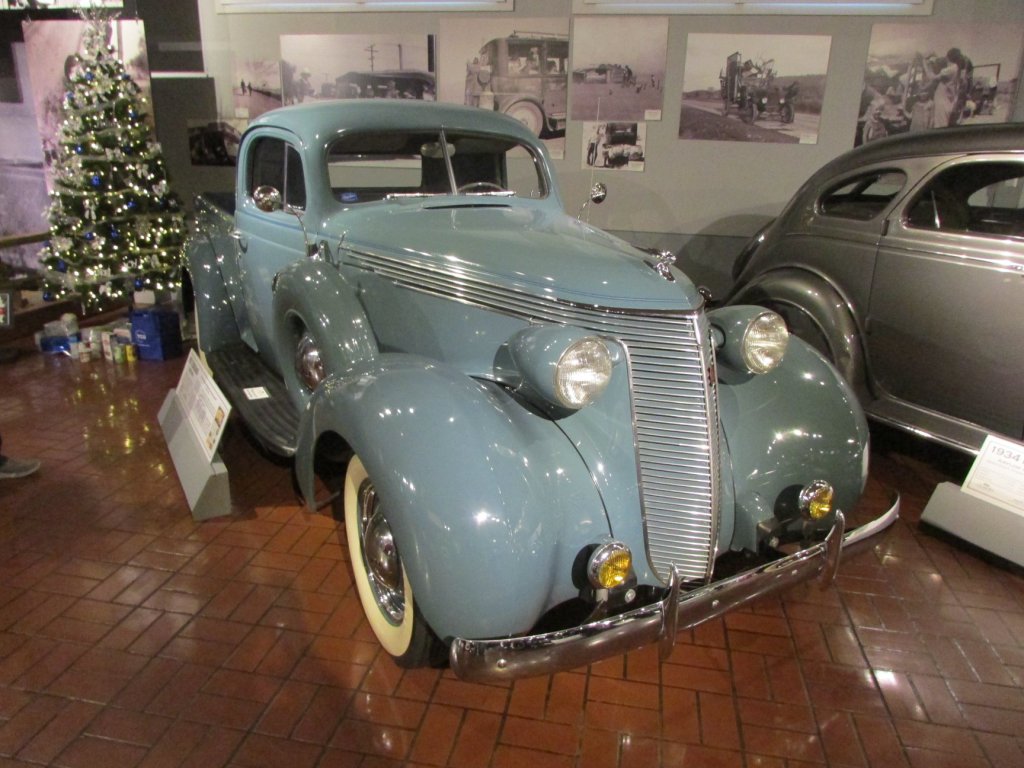
     There was a large hall dedicated to muscle cars, with some very rare ones on display. These included a Shelby Mustang and a Mr. Norm Mopar. I had also come across a Honda motorcycle customized by GM to accompany its Pontiac Banshee show car as well as a real Shelby Cobra and a Corvette concept car. There was an entire section dedicated to Lincolns and a whole building devoted to Cadillacs. It was cool to see all the early cars on display, from the 20’s and older, but one of the most surprising things I came across was a Lincoln concept car that was only a few years old. I did not expect to see that at a museum not dedicated to any one particular brand.

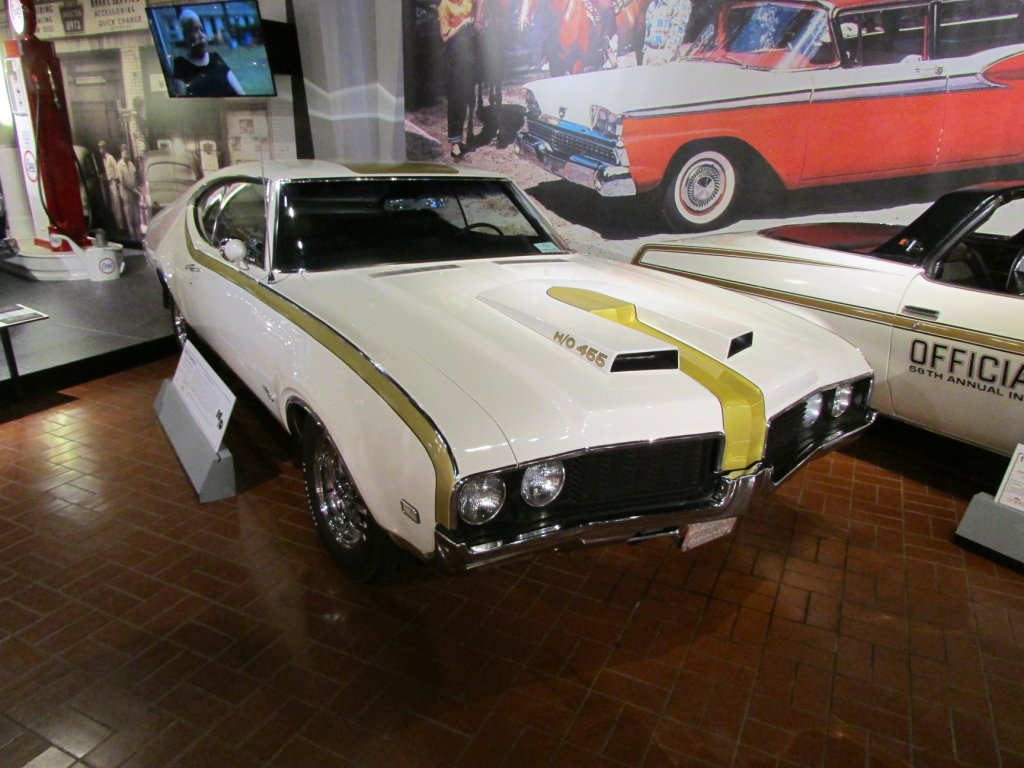
    An Oldsmobile 442 in the muscle car exhibit.

    If you are a fan of cars, I would recommend the Gilmore Car Museum. It has something for everyone. They are always rotating exhibits. In 2021 they are adding a new muscle car exhibit. You can view their official website here. Check it out to see their upcoming events. Know of a car museum or car event I should go to next? Please send me a message and let me know! Don’t forget to subscribe to get an email when a new article comes out.