Category: cars

  • The Early Ford V-8 Foundation Museum

    The Early Ford V-8 Foundation Museum

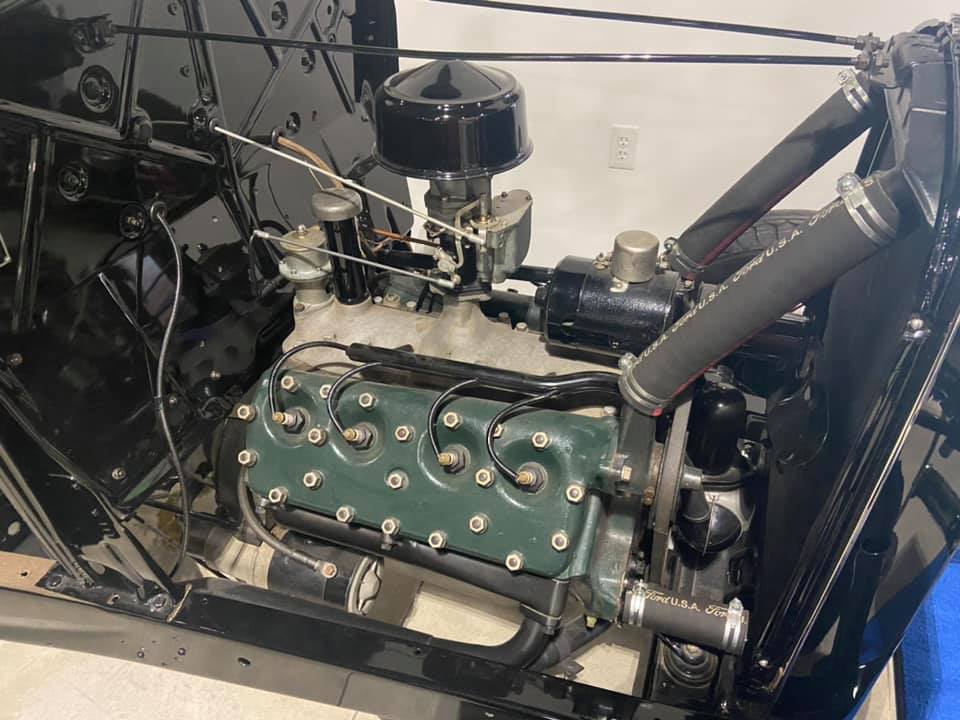
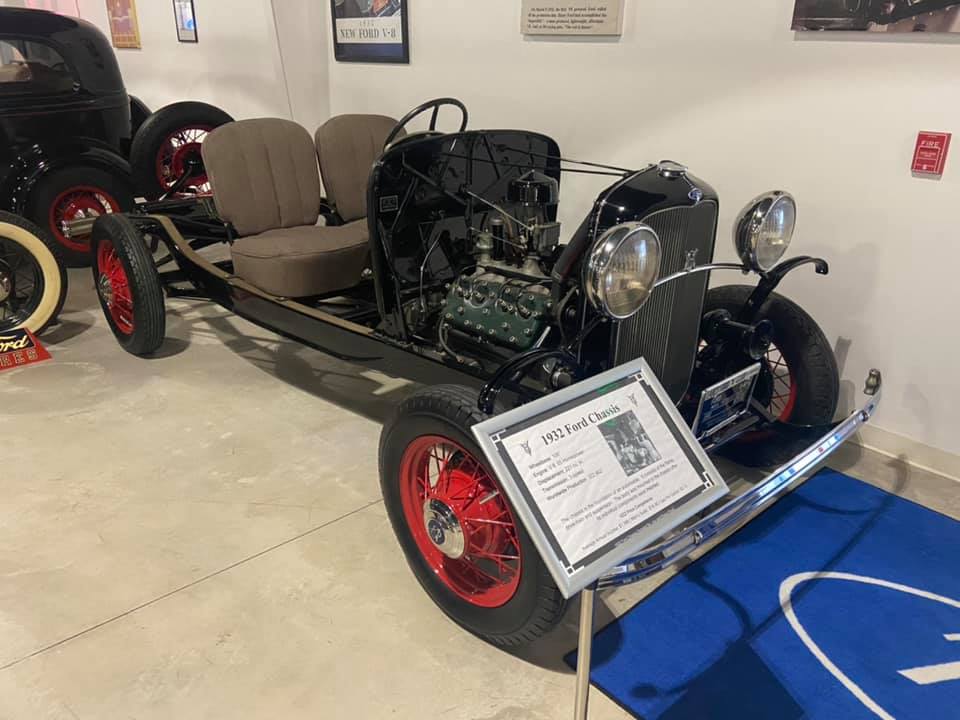
    One of Auburn, Indiana’s great car museums is the Early Ford V-8 Foundation Museum. This museum was my third and final car museum stop of the day, having already been to the Auburn Cord Duesenberg Museum and the National Automotive and Truck Museum back in town. It is dedicated to Ford Flathead V-8s and the vehicles that were powered by them. It is incredibly well set up; its displays are far beyond what is often seen at a typical car museum. Being a car museum in Auburn, Indiana means there is stiff competition, however, The Early Ford V-8 Foundation Museum holds its own. Early Ford V-8 Foundation Museum is located just outside of Auburn, on the other side of the expressway that hosts the Auburn Fall Classic Collector Car Auction. Part of the building itself is made to look like a set of gears and is a replica of the “Ford Rotunda” used at the 1933 Worlds’ Fair. The Ford Rotunda was a gear-shaped building that held the Ford exhibit at the World’s Fair. On the inside of it, there stood a giant globe showcasing Ford factories and resources around the world. It is not far from RM Auctions, which hosts the famous collector car auction in Auburn.

        The Cars

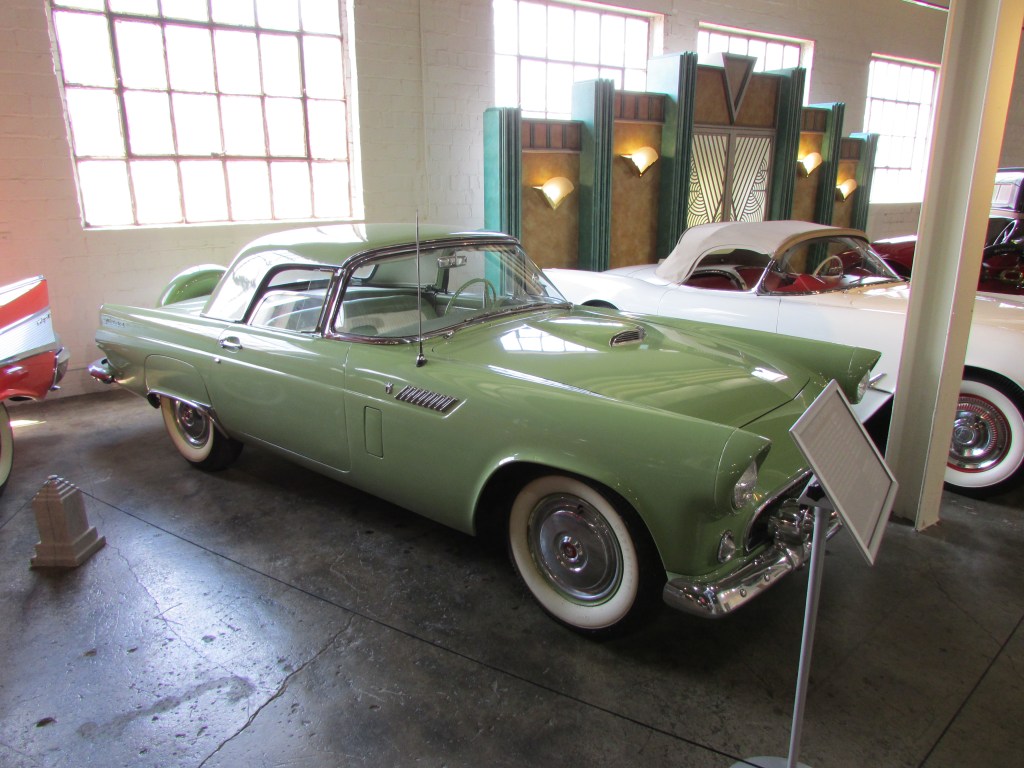
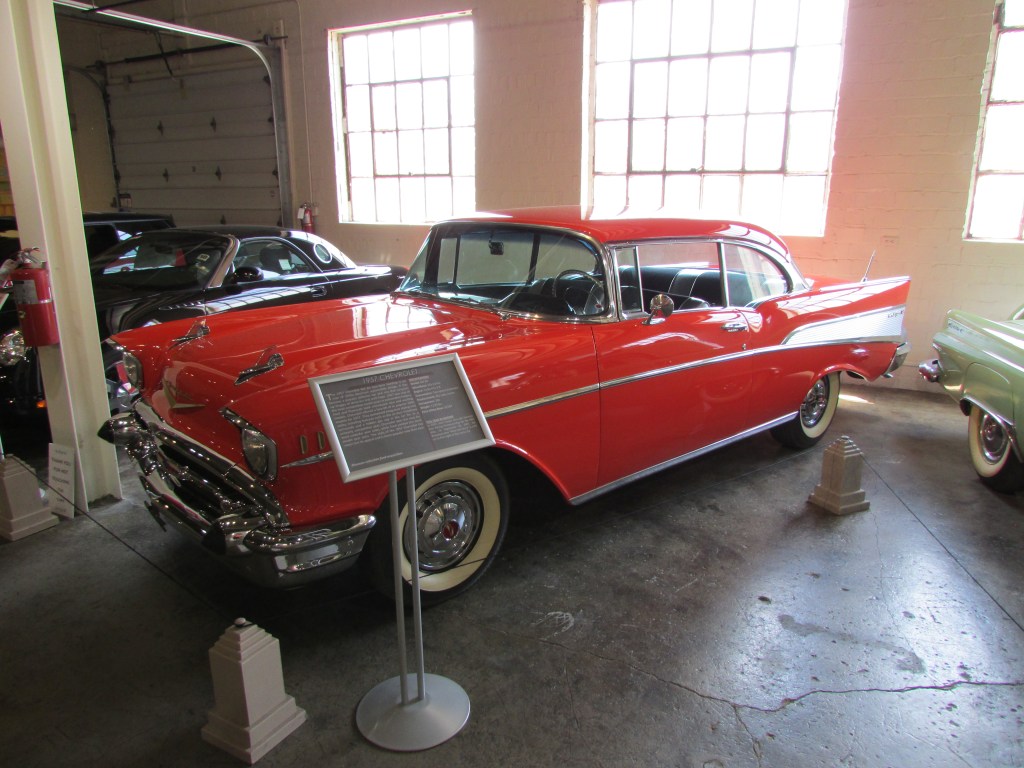
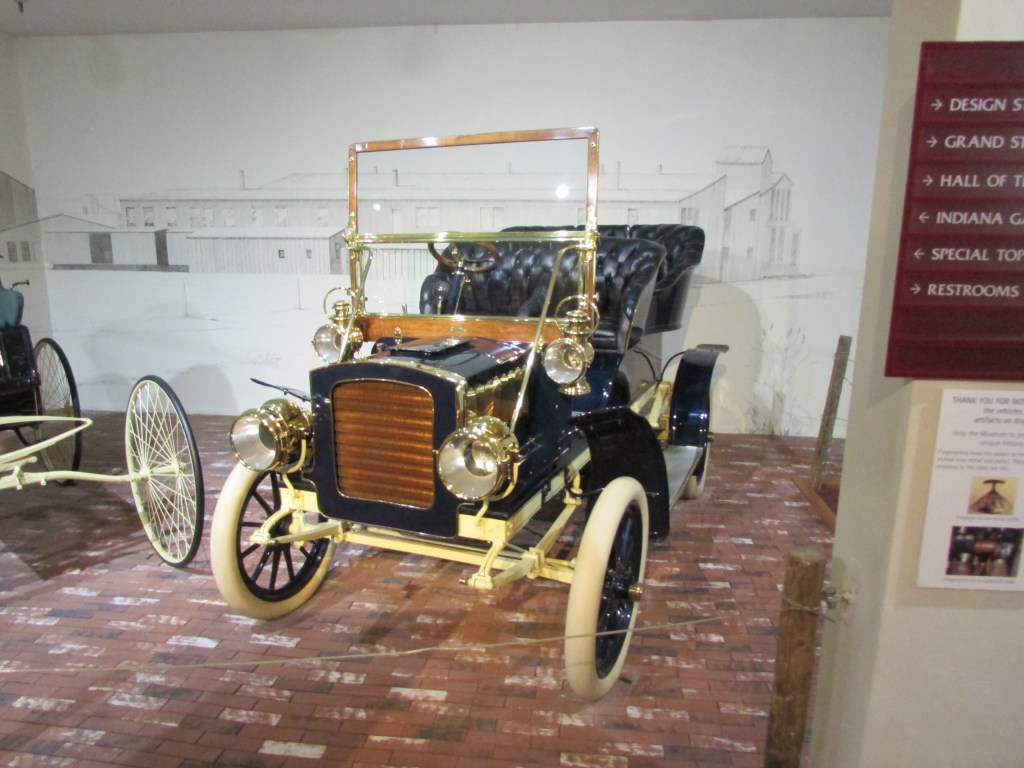
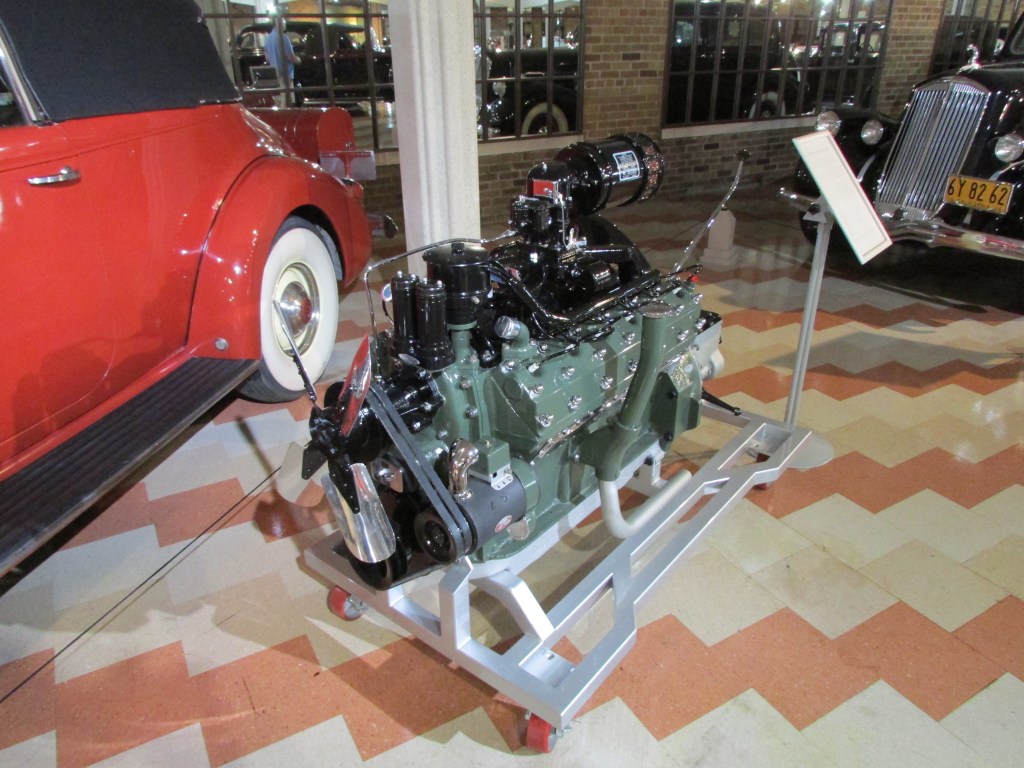
    The beginning of the Museum features some of the many cars powered by the flathead V-8 through the years. They even have a cutaway engine on display. Although it is a slight deviation from the V-8, there is also an impressive Lincoln V-12 on display. What surprised me about the Flathead Ford V-8s was just how long they were made. I had always associated them with the 1930s, but they were used in Fords in the U.S. from 1932 until 1953. For perspective, that is the year the Chevy Corvette debuted, and just two years out from the Ford Thunderbird. Although well before the Flathead V-8, there is even a 1904 Ford Model B there. One of the most elegant cars on display is undoubtedly the burgundy V-12-powered 1937 Lincoln Zephyr coupe.

    The 1936 Ford Dealership.

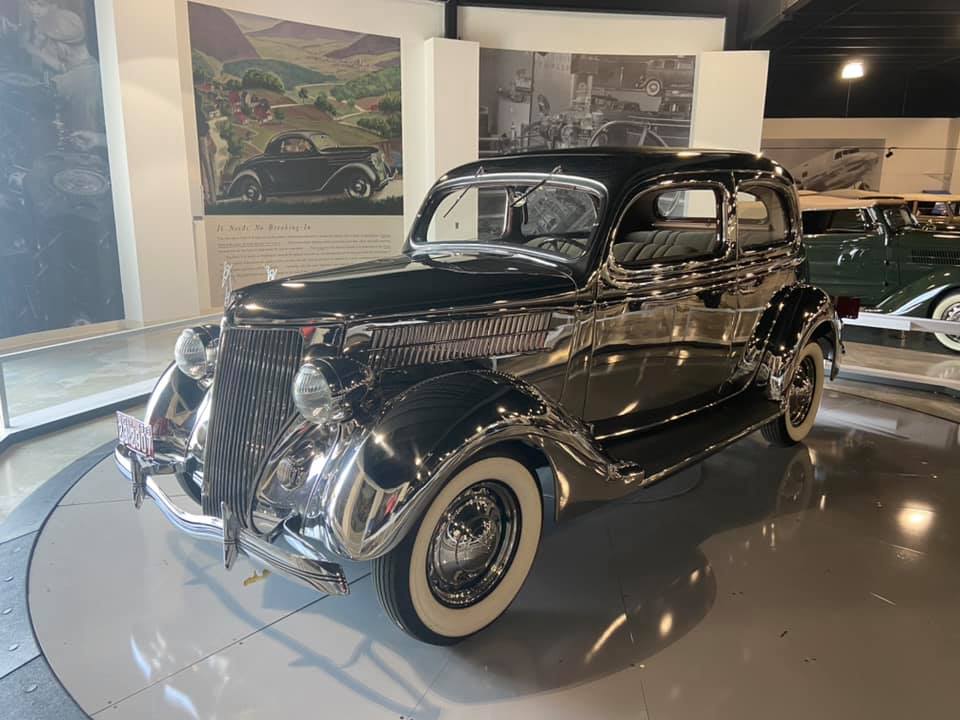
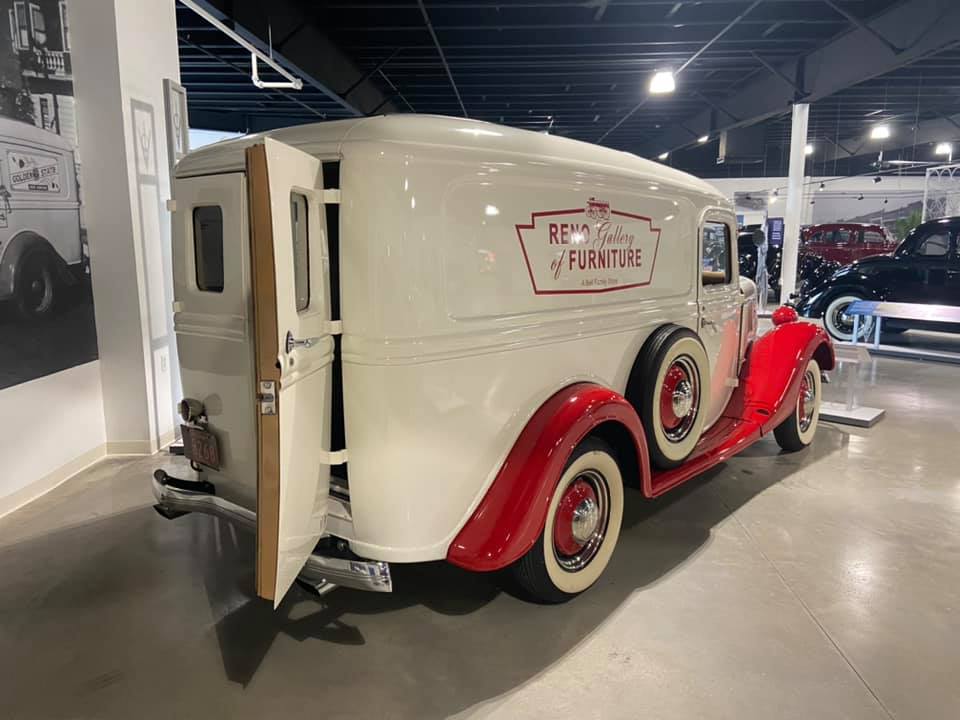
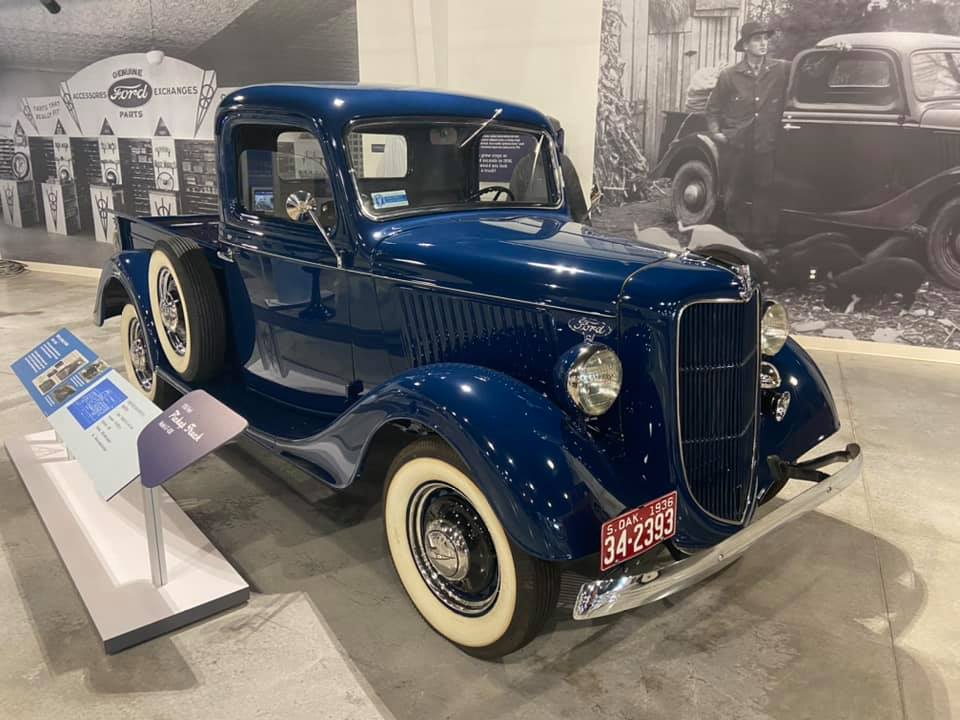
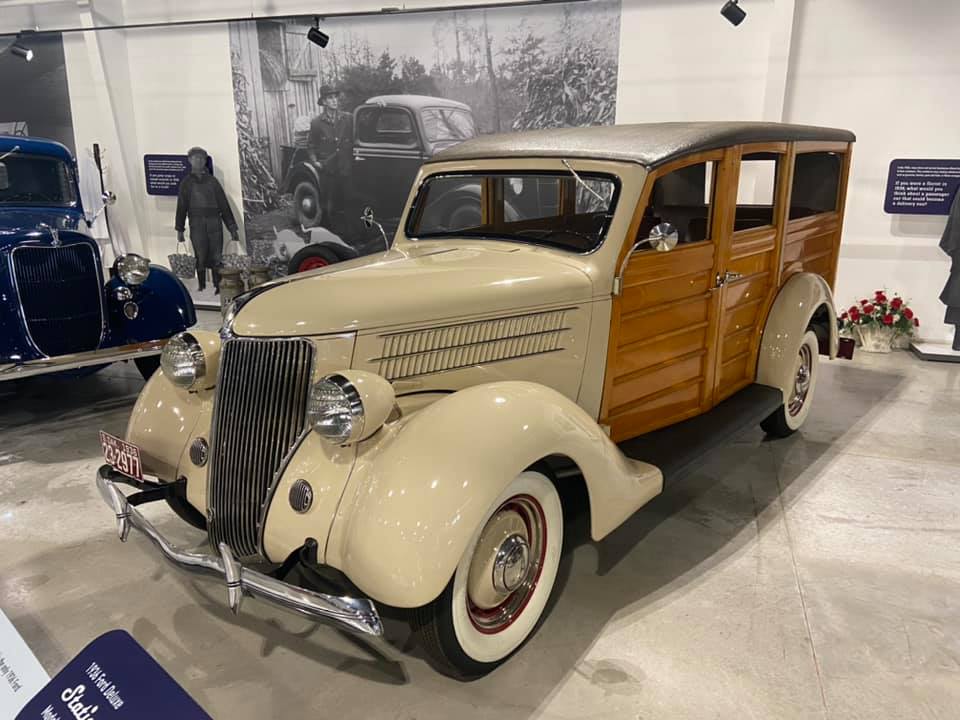
    A large section of the Museum is dedicated to a replica of a 1936 Ford dealership, complete with every model of car (and pickup) that Ford offered in 1936. A fact that shocked me was that in 1936 the only engine available in Fords was the Flathead V-8. It speaks to how well it was designed, providing both performance and economy, with fuel economy being critical to potential buyers as the depression dragged on. There is even a stainless steel 1936 Ford there. It was the result of a collaboration between Ford and Allegheny Steel. The car was one of several stainless steel concept Fords made over the years. There is a striking contrast between the classic 30s body style and the shine of stainless steel. Unlike the famous stainless steel sports car the DeLorean, the body of the Ford has a chrome-like shine to it. For one year of cars there is a lot of variety, such as the woodie station wagon and the delivery van. To top it all off, there is a period-correct cash register.
    The Speed Shop

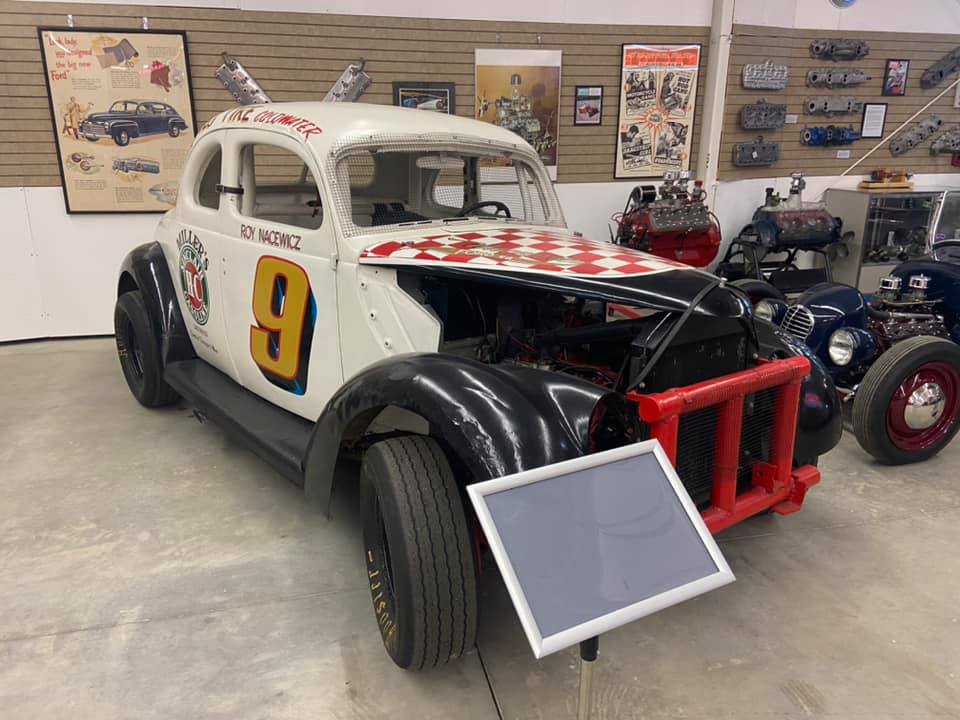
    On the other side of the building is The Speed Shop. It includes a replica of a vintage Indy Car complete with a seat for a riding mechanic (once required for the Indianapolis 500), a hot rod, an early stock car, and some other unique vehicles. There is even a Turbine-powered Ford tractor. There is a large selection of period-correct aftermarket parts for Flatheads and high-performance Flatheads on display. Since so many Flathead V-8s were made, it naturally found its way into hot rods and race cars, which meant there was a strong demand for performance parts.
    The Experience

    Although The Early Ford V-8 Foundation Museum is one of several car museums in Auburn, Indiana. It takes its narrow focus and does it incredibly well, from showroom stock on one end to heavy-specialized race cars on the other end. It does not take long to get through, but it is easy to be drawn in, especially at The Speed Shop. It leaves you with an appreciation for the longevity of and how widespread the Flathead V-8 was, from passenger cars to race cars. It is a name synonymous with V-8s, well before the 426 Hemi or the 350 Chevy Small-block. The Flathead V-8 no doubt influenced engines and helped shape the American car culture for years to come. You can check out their website at fordv8foundation.org. You can check out my blogs about two other great car museums here: Auburn Cord Duesenberg Museum and the National Automotive and Truck Museum. Have you been to the Museum, or know a car museum or event I should go to next? Let me know in the comments!

    The March 2024 Texas Mile

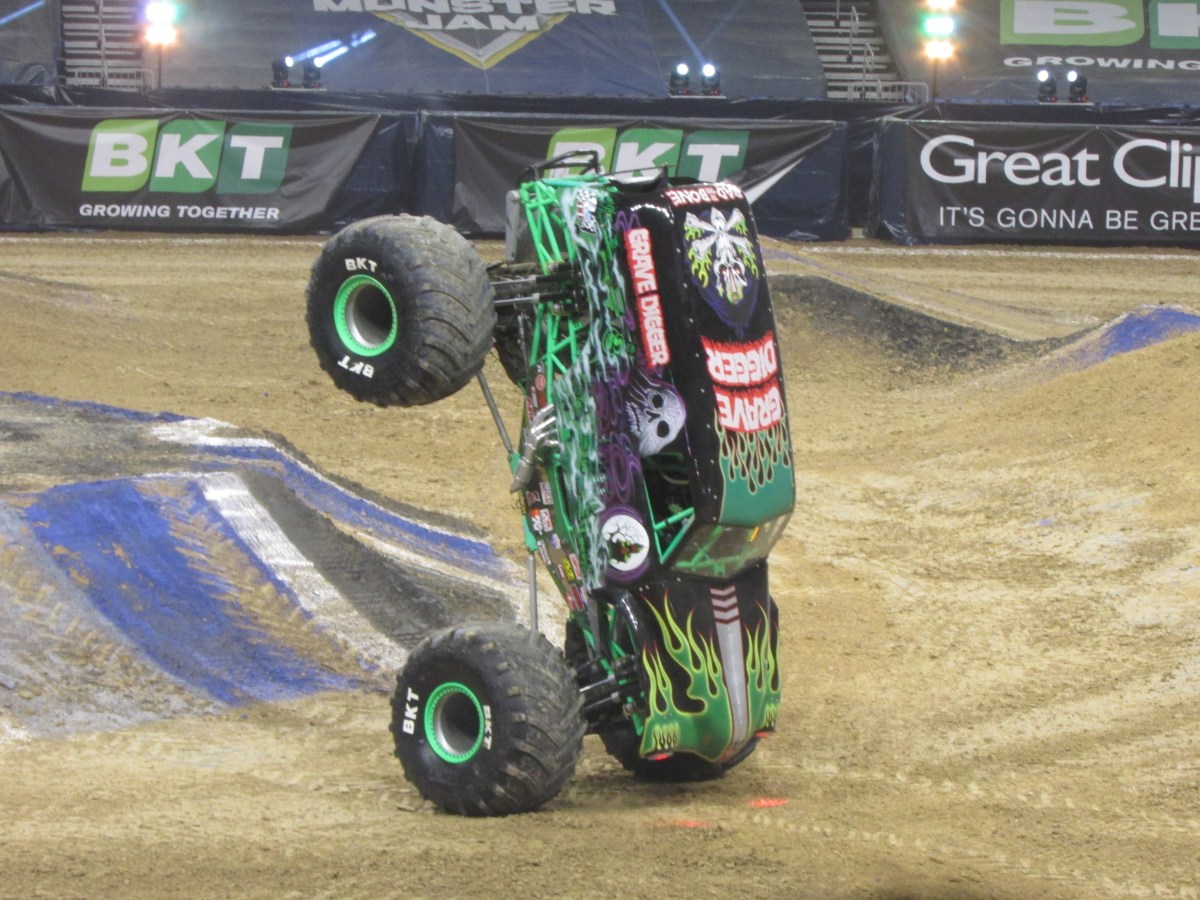
    In March and October each year, people bring vehicles to the Texas Mile to see how fast they can go in a mile. The following is my account of the 2024 March event.

  • The National Automotive and Truck Museum

    The National Automotive and Truck Museum

    The National Automotive and Truck Museum, an impressive collection of cars and trucks, is located in Auburn, Indiana. It is an unassuming building neatly tucked away behind the Auburn Cord Duesenberg Museum. It could easily be missed if you were not paying attention. However, not going to The National Automotive and Truck Museum would be doing yourself a major disservice if you are already at the Auburn Cord Duesenberg Museum. It is a separate building, although you can get a Auburn Cord Duesenberg Museum/National Automotive and Truck Museum combo ticket if you want. It also includes one of the most valuable American vehicles ever made, but more on that later.

    Dodge Tomahawk
    The Dodge Tomahawk concept bike. Note the VIper V-10.

    Pre-war classics and a unique “barn” find.

    Once you get your ticket and leave the gift shop, you’ll come across a room chock-full of die-cast cars representing countless brands and models and a collection of pedal cars. Some of these antique pedal cars are nearly identical to their full-sized counterparts, many of which can be found in the Auburn Cord Duesenberg Museum across the parking lot. Just pass that room; you will find yourself in a large section filled with early 20th century cars. These cars include a 1935 Cord that goes far beyond what would be considered a typical “barn find.” It was buried for years and only dug up in the 1980s. Despite the effects of about 50 years, pressure, dirt, and water, the body is surprisingly intact, given the circumstances.

    A picture of a rare painted DeLorean.
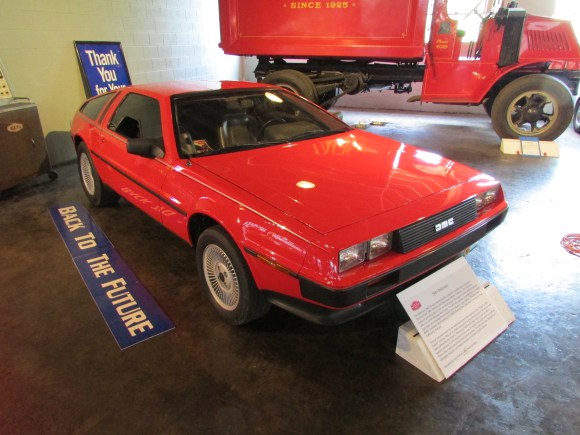
    A rare red DeLorean. It was part of a factory test to see how paint would work on the stainless steel body.

    The Car Room

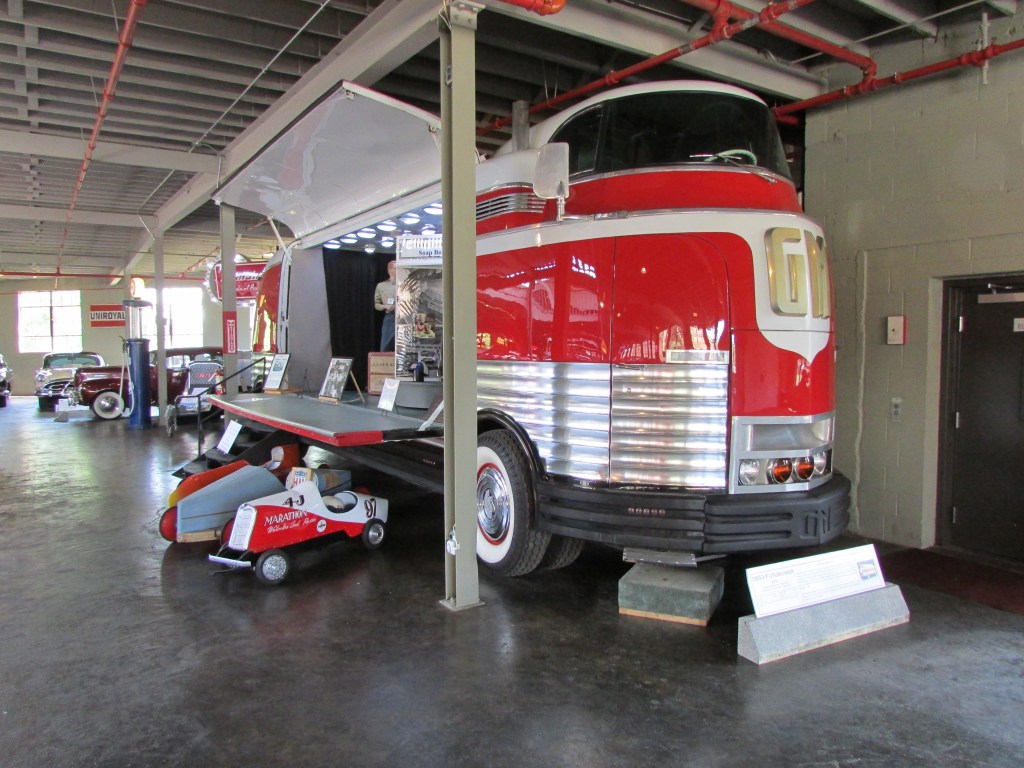
    Exiting that room, you come upon the main room for the car section. It is filled with an incredible amount of variety, from the massive, iconic GM Futurliner, to the diminutive pre-war Austin 7. There’s the replica of the Essex Wire Shelby Cobra race car. There are also some interesting stories behind some of the cars. The 1981 DeLorean with a red paint job? As per the Museum, it was part of a test to see if the paint would work on the unconventional body. The red stands out as almost every DeLorean is the same unpainted stainless steel. The unassuming 1995 Ford Crown Victoria? It belonged to Hollywood Icon Katherine Hepburn. There’s also the legendary concept bike/quad, the Dodge Tomahawk. It is essentially a four-tire motorcycle powered by a Viper V-10 engine. As of writing, I’ve been to this Museum three times, and they keep the cars in rotation.

    A picture of a Futurliner.
    The Futurliner, notice the central position of the driver.

    The Futurliner

    At the far edge of the room sits a 1940 GM Futurliner, one of just a handful made. These trucks, which look like an RV mixed with a semi truck toured the country showcasing new-for-the-time technology. They are roughly the size of a full-size RV or a city bus, and the fact that they don’t have side windows them look even larger. One side of the Futurliner opens to show the display, and lights extend up out of the roof, forming a sort of wordless marque. Interestingly, the driver sits in the middle and very high up. When looking up at the Futurliner from the front, it makes you appreciate just how high up the driver is. The engine sits forward, under the driver. Surprisingly, for a vehicle of that size, it does not have two rear axles common in modern city buses and RVs. Instead, it has eight wheels, two at each corner. The front bumpers follow the round front and back of the Futurliner and blend seamlessly into the sides of it. They also have a display example of the type of straight-6 that powered it. One of these sold at an auction for 4.1 million dollars. For a while, this was the most expensive American vehicle ever sold at an auction. You can learn more about the Futurliner on the website Futurliner.org.

    A horse drawn fuel tanker.
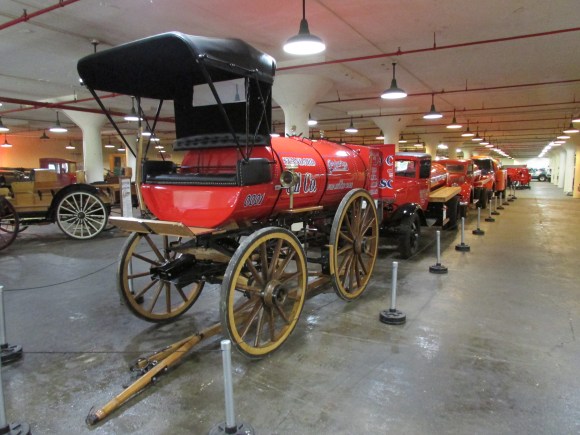
    A horse drawn fuel tanker.

    The Truck Room

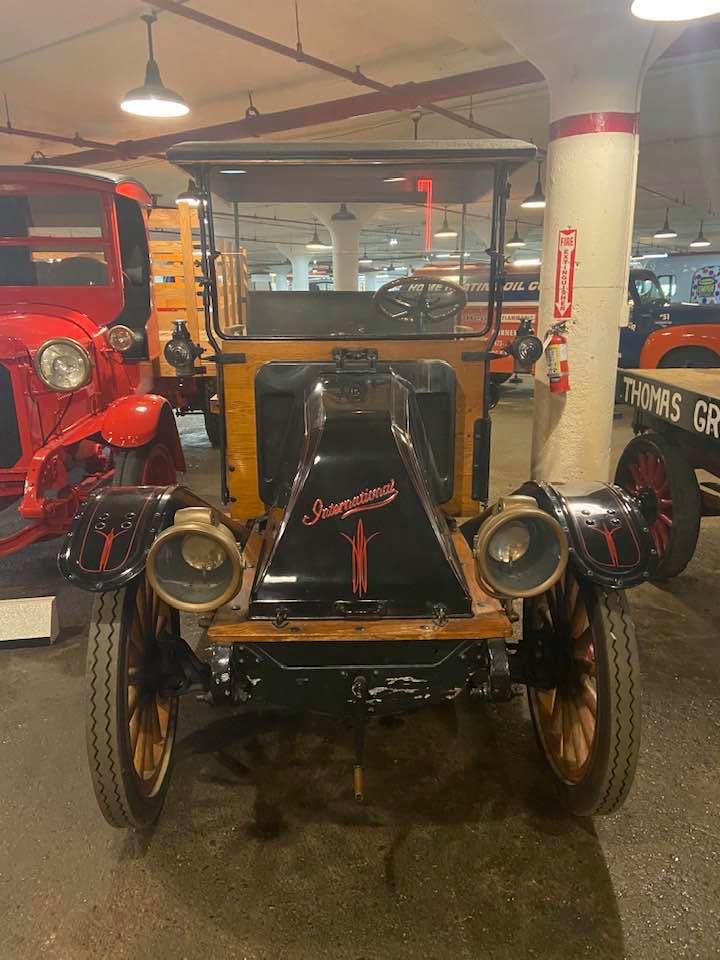
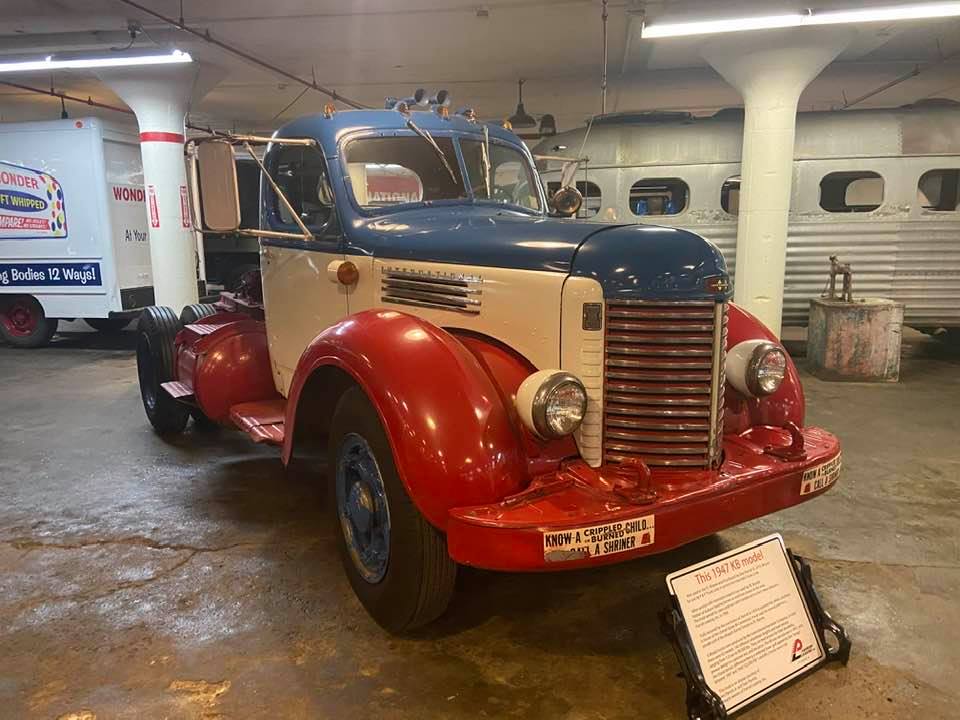
    The basement floor is the truck section, and it takes up almost every bit of space that the ground-floor car level does. It features over 100 years of personal and commercial trucks and even a land-speed record holder semi-truck that did well north of 200 mph. One of the things that immediately catch your attention is the row of fuel-haulers, in ascending order by age, starting with a horse-drawn one. The horse-drawn fuel-hauler is a perfect wordless metaphor for the transitional era of the early 20th century. Walking through the trucks, I was impressed by just how many early 20th century trucks there were, a chain final drive in place of a driveshaft is not an uncommon sight there. A cool thing about the trucks is that some of them come from the area. There is even a bus that was made in Auburn called a McIntyre. The 1911 model they have is far removed from what would constitute a modern bus: Three rows of seats and not a roof or window in sight, but it did what was made to do. Like the car floor above it, the truck section goes way beyond the Big Three, featuring brands like Studebaker and highlighting early examples of familiar truck brands like International.

    An antique truck.

    The Experience

    One of the great things about The National Automotive and Truck Museum is that you can take as much or as little time as you want. The Museum is divided up into several large rooms, and you don’t have to walk far to see it all, despite the size of the collection. However, time permitting, you may feel like digging deeper, reading the stories of the cars and trucks on their plaques, and checking out more of the extensive Futurliner exhibit. If you find yourself at The Auburn Cord Duesenberg Museum, the trip across the parking lot to this Museum is a worthwhile one. The Museum truly is a companion to the ACD Museum, as opposed to an afterthought. You can check out the Museum online at natmus.org. Also, you can view my blog about the Auburn Cord Duesenberg Museum here: https://carsandadventures.wordpress.com/2020/07/10/the-auburn-cord-duesenberg-museum/. I’ll be writing another blog about the final car museum I visited that day: The Early Ford V-8 Foundation Museum. Have you been to The National Automotive and Truck Museum? Let me know in the comments! As always, thanks for checking out my blog!

  • The Auburn Cord Duesenberg Museum

    The Auburn Cord Duesenberg Museum

    I got the chance to go to the Auburn Cord Duesenberg Automobile Museum in Auburn, Indiana again.  It is one of the most impressive car museums I have visited. The Museum represents Duesenberg, Auburn, and Cord, high-end early 20th-century car brands, who eventually came under the ownership of the same company. It is rare to find a car museum that houses so many cars worth hundreds of thousands, if not millions, but here it is the norm.

    The first road going Duesenberg ever made.
    A 1921 Duesenburg. It features a custom body designed to accommodate it’s 7 foot tall original owner.

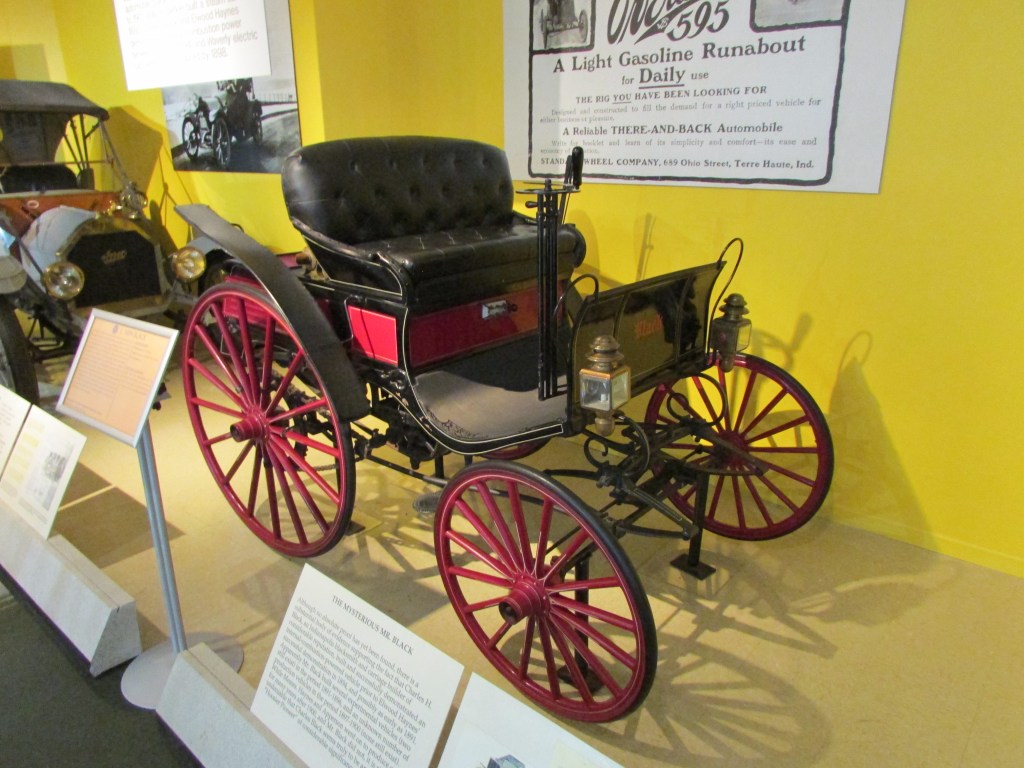
    Auburn, Indiana, is a small college town (city to be exact) in the northeast corner of Indiana (almost to Ohio.) Its connection to cars is strong; its nickname is “Home of the Classics” due to the number of car brands it produced. It also plays host to a massive collector car auction held at a designated site just outside of town. Auburn also features several car museums besides the Auburn Cord Duesenberg Museum. These museums include the National Automotive & Truck Museum, the Early Ford V-8 Foundation Museum, and the International Monster Truck Museum and Hall of Fame.

    Auburn car on display at the Auburn Cord Duesenberg Museum.
    An Auburn convertible.

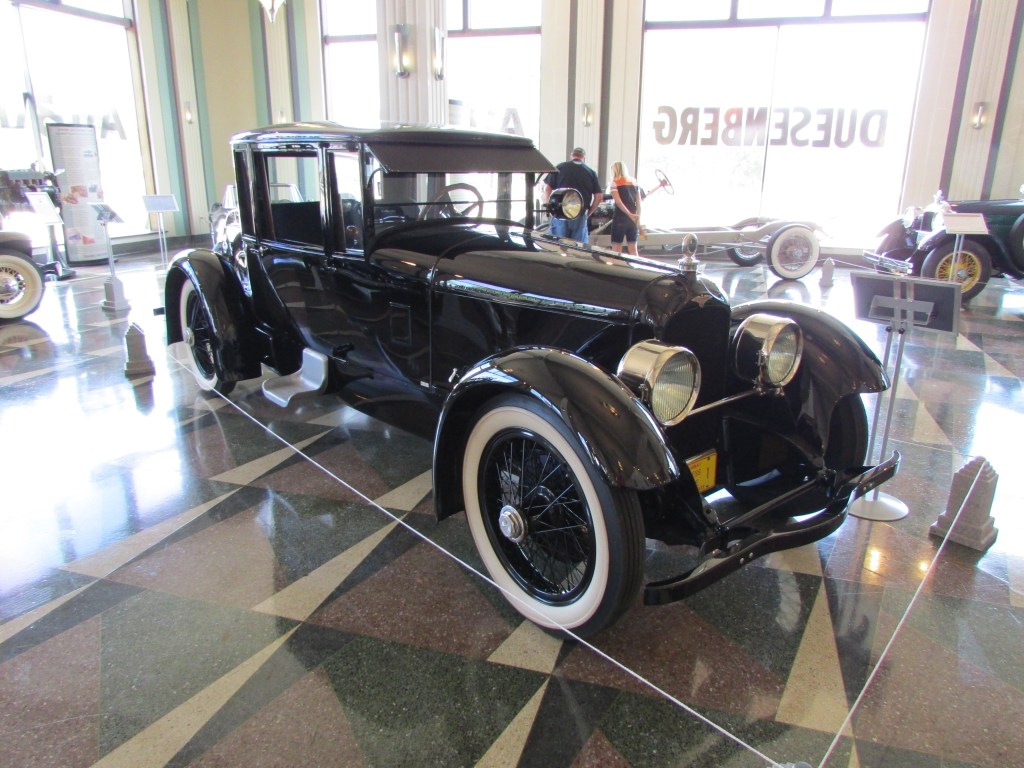
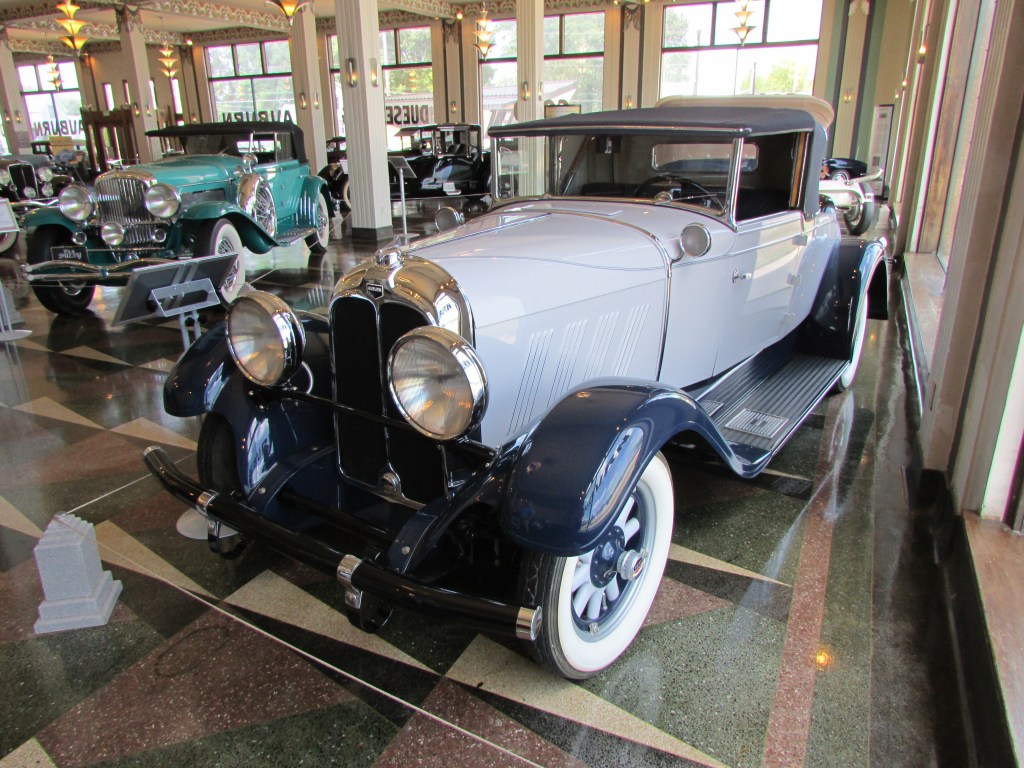
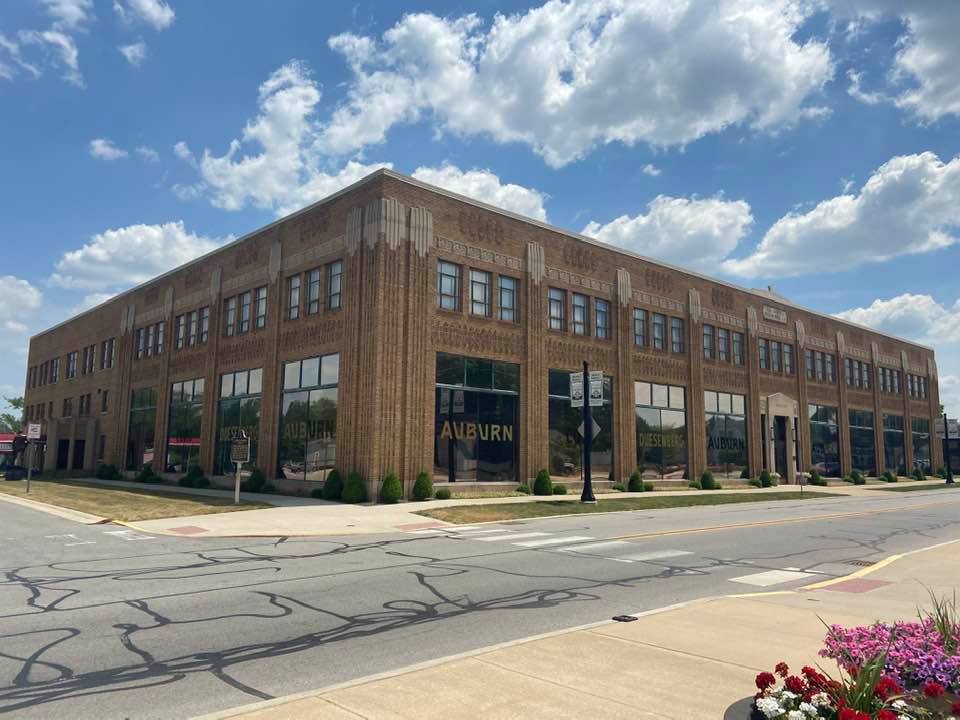
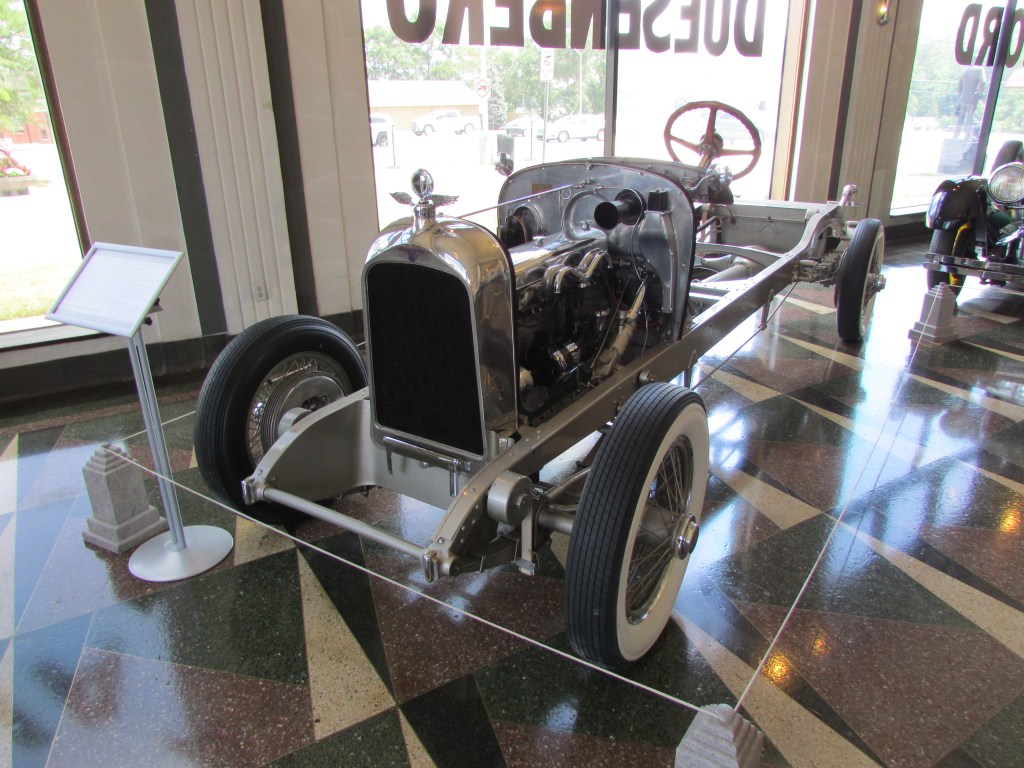
    The Auburn Cord Duesenberg Museum is housed in the company’s original three-story headquarters, which came complete with an Art Deco style showroom. Just standing in the showroom takes you back to the jazz age. There is even period-correct music playing. The showroom features over twenty Auburns, Cords, and Duesenbergs from different times in the company’s history. Although the company did not last long, thanks in part due to the Great Depression, they created some of the most elegant cars of the period, complete with technological innovations that would take decades to reappear. These included superchargers, hideaway headlights, and front-wheel drive. The Duesenbergs stand out in their variety, for not only color but bodies as well. A Duesenberg was bought from the manufacturer as just a motor, a frame, and not much else. A coach-building company was then hired to complete the car. This lead to some astonishing variety. Duesenberg’s are also known for their impressive even by today’s standards performance. A Duesenberg naturally aspirated straight-8 motor produced 265 horsepower, while the supercharged variant put out well over 300. Their performance is a reflection of their history. The Dusenberg race cars did very well on the track. These cars were well received by celebrities. Famed pilot Amelia Earhart owned a Cord, and actor Gary Cooper owned a Duesenberg.

    1948 TASCO car.
    The Tasco. Note the t-tops.

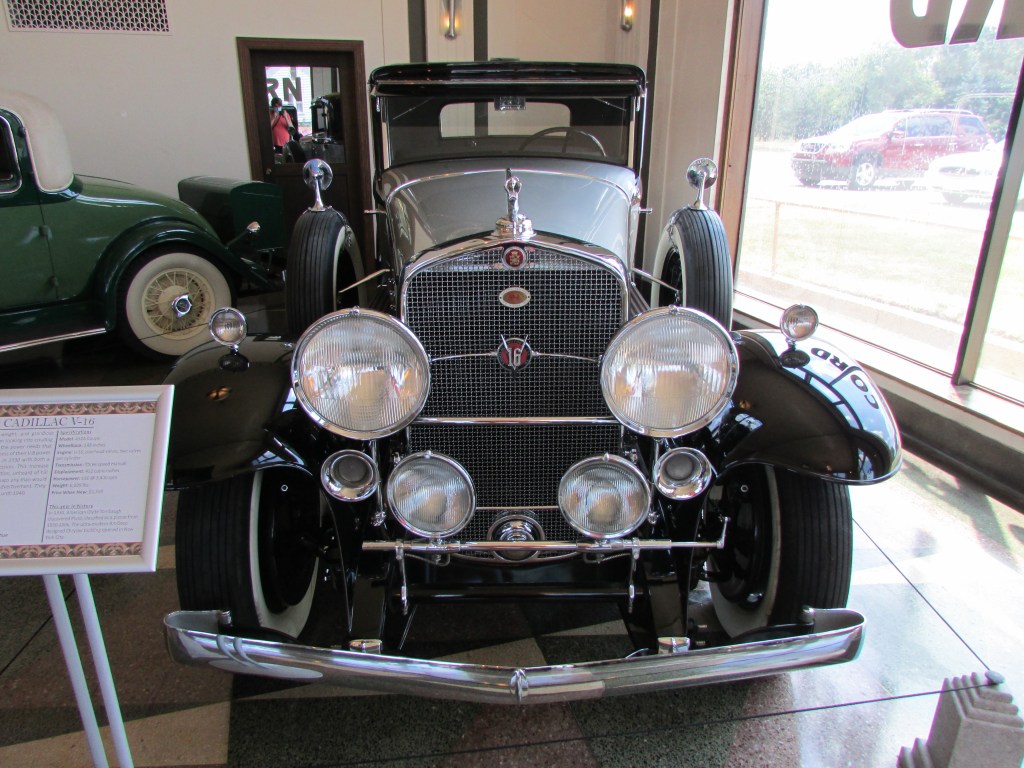
    Aside from the three brands on display in the showroom, there was an exhibit on cars of that era with a large number of cylinders, V-12s, and V-16s. I was particularly impressed by a beautiful V-16 Cadillac on display. Although the large cylinder era did not last long (the exhibit mentioned the increasing performance of the V-8 and lighter-weight cars made them unnecessary), the American V-12 has an interesting, if obscure, footnote in pop culture. In the original version of the icon rockabilly song “Hot Rod Lincoln,” the titular car is powered by a V-12, and not a V-8 like in later versions.

    A 1911 Metallurique. An early sports car.
    A 1911 Metallurique. This one was used in the 1965 comedy “The Great Race.”

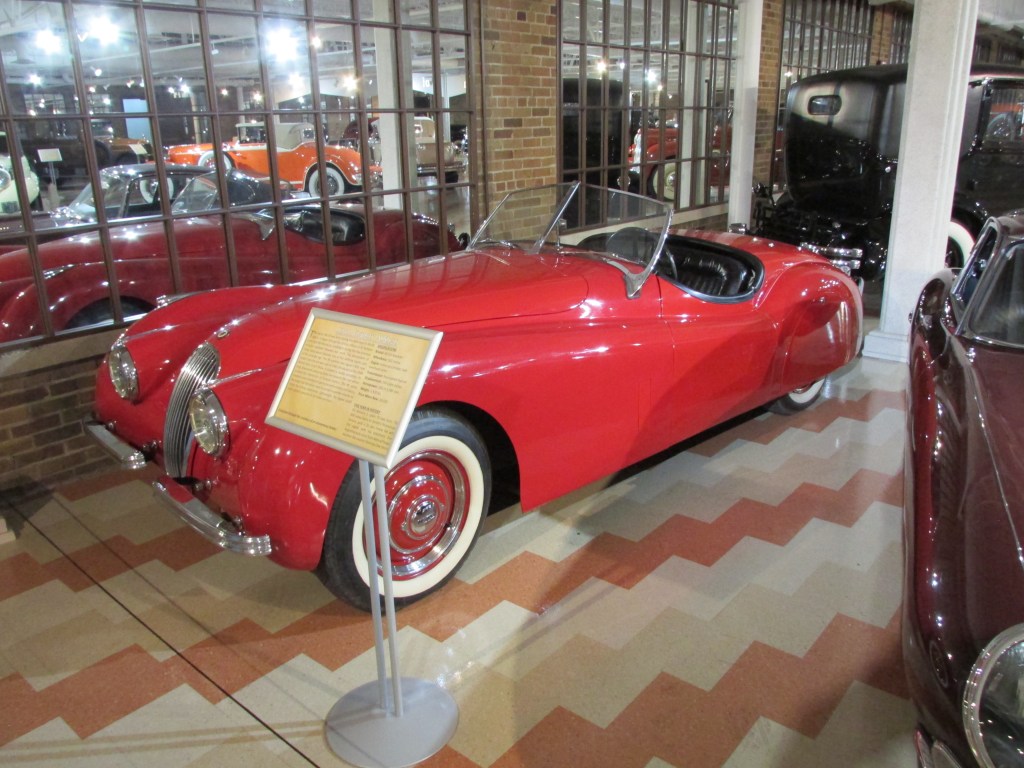
    Just past the main hall is a smaller room that features some interesting, non-A.C.D. cars. These included some iconic 50’s cars, a 1911 Metallurique that was featured in the 1965 movie “The Great Race,” and a 1933 Checker Cab. The second level is accessible from the grand staircase in the showroom. It would not look out of place in a historic mansion. The second level features an automotive-themed art gallery and a foot-tall version of the “Spirit of Ecstasy,” the famous hood ornament found on Rolls-Royces.

    A replica of an Auburn on display at the Auburn Cord Duesenberg Museum.
    A replica of the 1929 Auburn Cabin Speedster. The original was destroyed in the 1929 LA Auto Show fire.

    The third floor features more collections of cars and Company offices that look as though they did 80 years ago. There are also miniature clay-mockups of some of Cords. There was a special exhibit on this floor relating to infamous Indiana bank robber John Dillinger, which includes one of his Tommy Guns. There was also an exhibit on cars made in Indiana. In the early 20th century, during the dawn of the car, there were quite a few from Indiana. The 3rd floor also featured one of the most unique one-off cars of the ’40s: the Tasco. What makes this one-off sports car so interesting is not just the aviation-inspired interior and exterior, but its use of a t-top. Roughly 20 years before it appeared on a Corvette.

    V-16 Cadillac, part of an exhibit on V-12 and V-16 cars.
    A V-16 Cadillac.

    This was my third trip to the Auburn Cord Duesenberg Museum, and each time there has been something new. Because of the other car museums nearby, I was able to go to three in one day: The National Automotive and Truck Museum (which is on the property) and the Early Ford V-8 Foundation Museum (which is just across town.) I will be covering both of those museums in upcoming posts. This is the first of three articles I will be writing about car museums in Auburn. If you have been to the Museum or have anything to add, please let me know in the comments! You can visit their website at www.automobilemuseum.org.  

  • The Cars of Elvis Presley

    The Cars of Elvis Presley

    I recently got a chance to visit Graceland in Memphis, Tennessee, the famed home of Elvis Presley. After touring the house, I checked out the Elvis Presley Car Museum across the street. It is part of Elvis Presley’s Memphis, a museum dedicated to him. It contains many of the cars the iconic singer owned throughout his life. There were three whole large rooms devoted to his cars, motorcycles, and boats. Elvis’ love of cars is well known, but it is still amazing to see the variety of vehicles on display. It is one of several large exhibits on display at Graceland.

    One of Elvis’ Cadillac’s, this one has been customized.

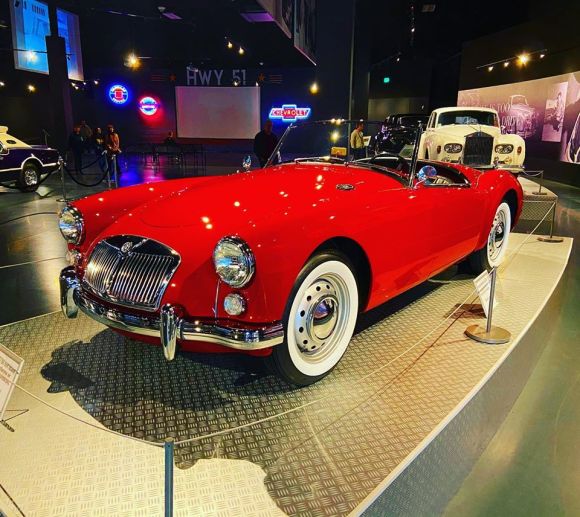
    Elvis had a wide range of cars that he liked, from a Ferrari Dino to a Stutz Blackhawk. His range of cars he was interested in was as varied as his career, which took him from music to movies and back to music.  Although his cars represent a wide variety of tastes and styles, and his love of Cadillacs was well known, he had an affinity for German cars, of which, two Mercedes Benz are on display in the Museum. The collection includes a Mercedes Benz limousine, which would have been a rare sight in the ’60s. Elvis’ interest in Germany cars makes sense, as he was stationed in Germany when he was in the Army in the ’50s; it no doubt left an impression on him. There was a beautiful 1960 MG MGA convertible. One of the most distinctive cars of his on display and one that perfectly encapsulates Elvis is his custom 1950’s Cadillac, with its hard to miss purple paint, gold rims, custom paint, and side pipes. An interesting little detail is that the side pipes are red on the inside. His famous pink Cadillac was there as well.

    An MG MGA.

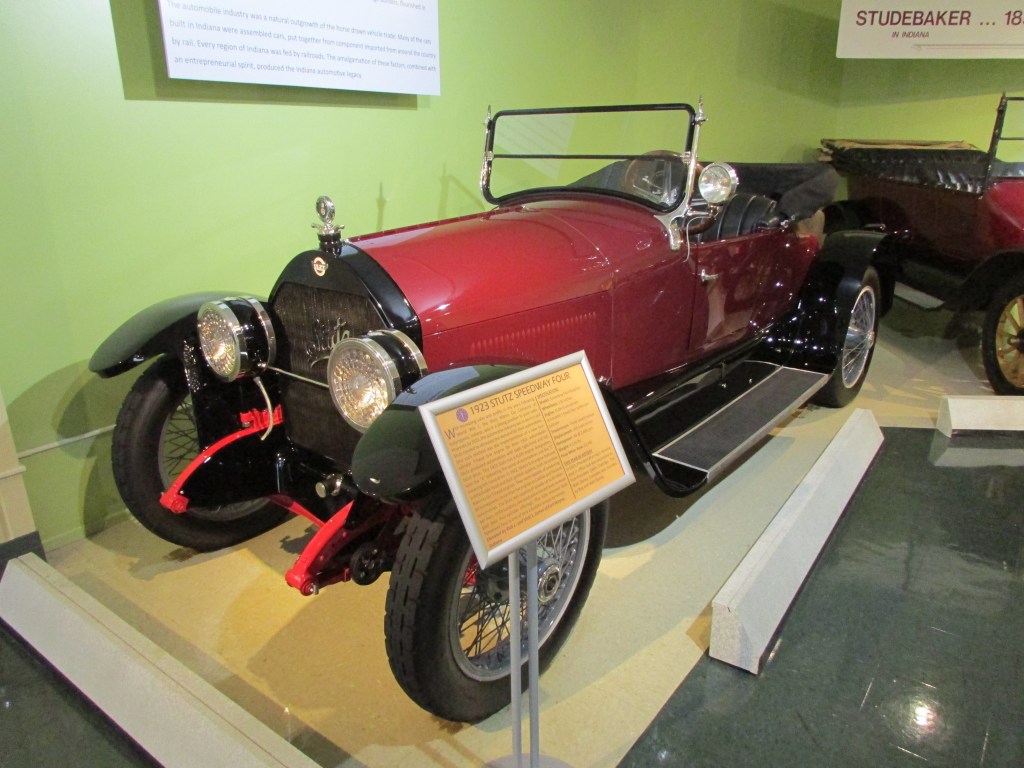
    One of his latest and most unique cars was his Stutz Blackhawk, a luxury coupe based on a Pontiac, and powered by a Pontiac motor. The Stutz Motor Company made luxury vehicles based on mass-produced American cars in the 60s, 70s, and 80s. It was a revival of the original Stutz company. The original Stutz Motor Company dates to the early days of automotive history. What stands out about the Blackhawk is the large headlights, a call back to huge headlights found on luxury cars of the ’20s and ’30s and the chrome side pipe, which is most likely also a callback to high-end pre-war cars.

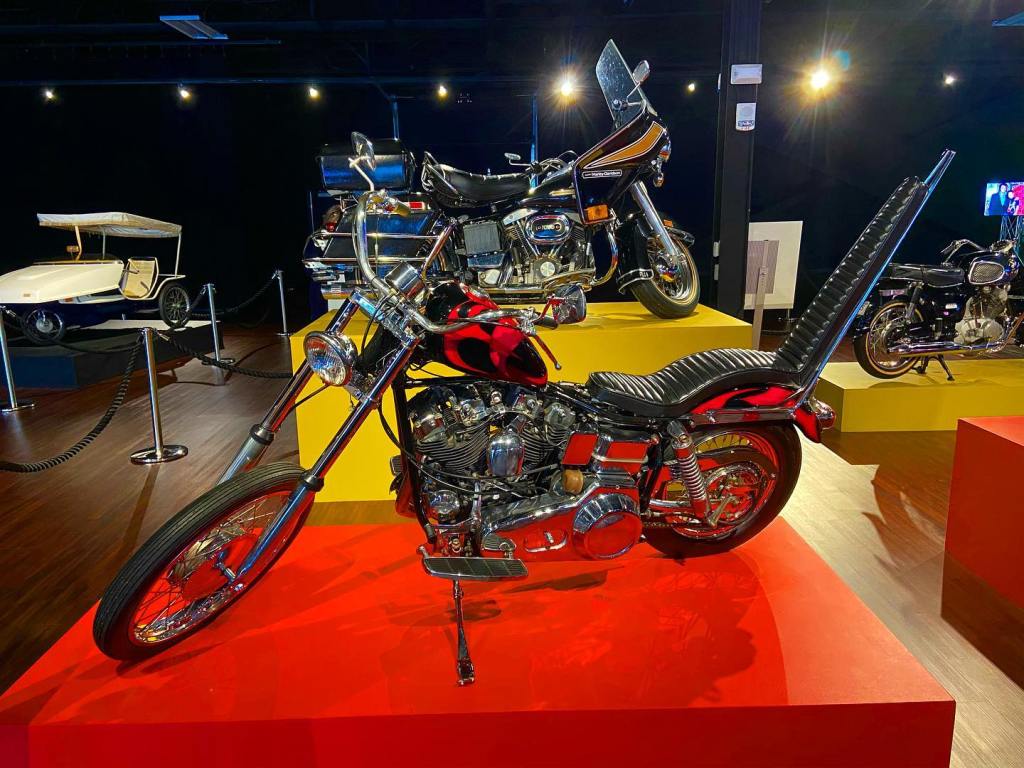
    Elvis’ custom chopper. Despite the radical style the bike is surprisingly practical for a chopper, with front and rear suspension and brakes.

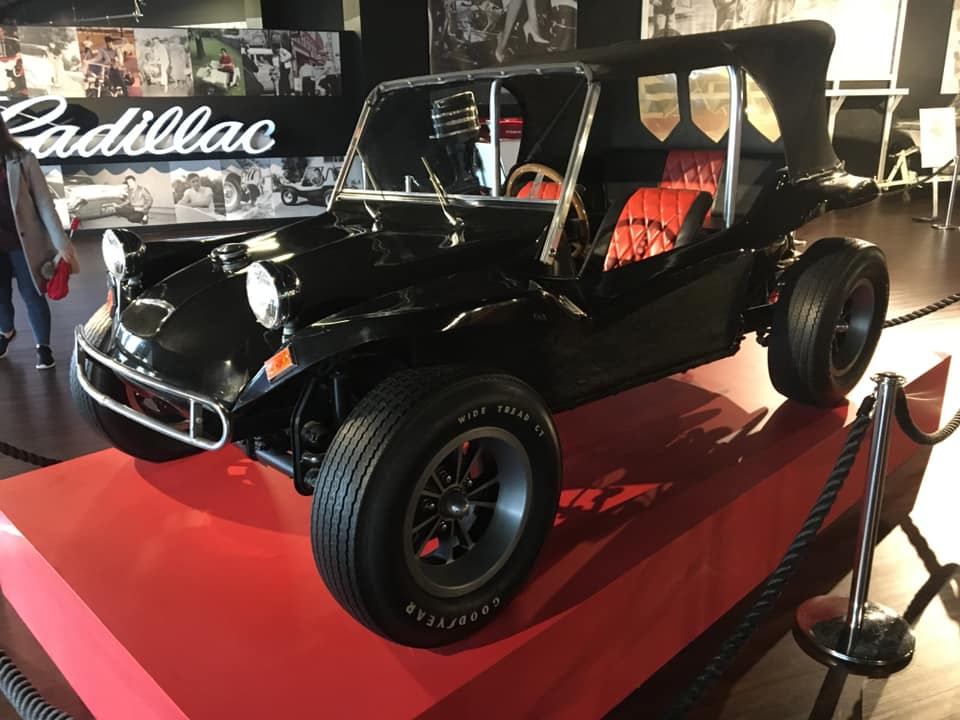
    His motorcycle collection included countless Harley’s. Elvis was a longtime Harley fan, even appearing on the cover of the official Harley magazine early in his career. The exhibit goes beyond cars and motorcycles. Numerous boats of Elvis’ are on display as well, and even a tractor and golf cart are there. One of his most unique vehicles is no doubt Elvis’ snowmobile, modified for the Memphis climate by replacing the skies with wheels. The wheels were interestingly a factory kit.

    A VW-based dune buggy.

    The collection of cars would be impressive even without their connection to Elvis. The whole setup is very well done, letting you get up close to the many cars, motorcycles, and more on display. The Elvis Presley Car Museum stands out as one of the most memorable experiences from my visit to Graceland (although my love of cars may make me a little biased.) If you ever find yourself in Graceland, check out the Elvis Presley Car Museum, it is worth your time.

  • The Pontiac Pegasus: The Time Pontiac put a Ferrari V-12 in a Firebird.

    The Pontiac Pegasus: The Time Pontiac put a Ferrari V-12 in a Firebird.

    In 1970 Pontiac created one of their most unusual concept cars of all time. A Ferrari V-12 powered Pontiac Firebird. It seemed to blur the line between a passion project and a concept car. However, under closer observation, the practical nature of it is revealed.
    GM was no stranger to usual concept cars; the name Firebird itself comes from a series of turbine-powered concept cars from the ’50s. But why would Pontiac, a company famous for its performance cars and engines, put a Ferrari V-12 in one of their cars? At 4.4 liters, the V-12 was much smaller than the average performance V-8 to come from GM.
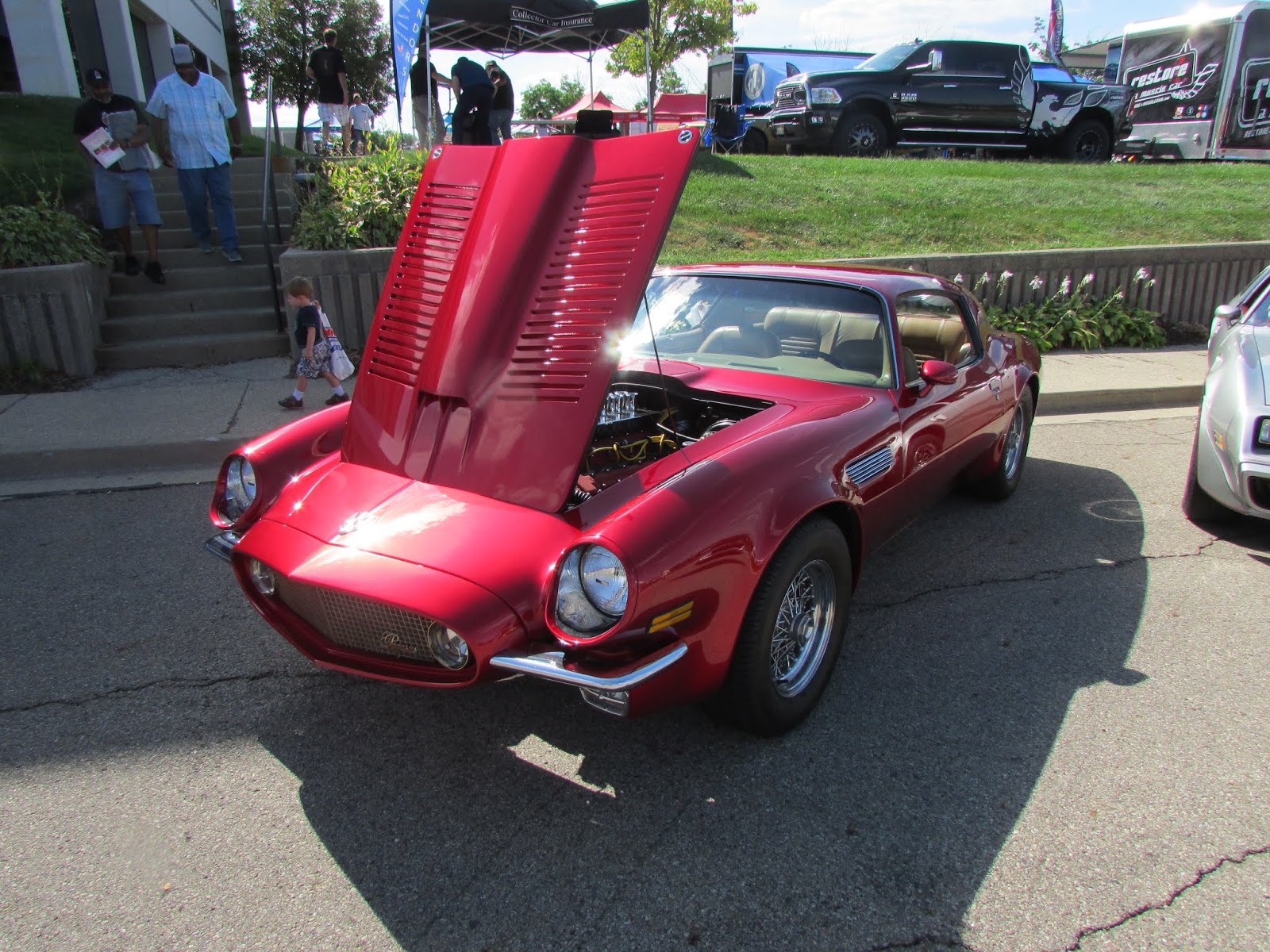
    The amount of passion that went into the car was obvious. There was not only a custom Pegasus logo on the grill but a Porsche-esque coat of arms on the hood. An original design. The name Pegasus is derived from combing the Firebird (a mythical creature in its own right) and that of a horse. The Ferrari logo depicts what is known as “the Prancing Pony.” The result is the legendary mythical winged horse, the Pegasus.
    The Pontiac Pegasus at the 2019 Trans Am Nationals.
    This year I had the chance to see the Pontiac Pegasus in person; it was part of a group of show cars brought to the Trans Am Nationals in Fairborn, Ohio. It was in excellent condition. I even got to hear it run as it was moved for the night. Oddly enough, it gave off a low rumble that would not be out of place coming from a small block Chevy. It was great to get up close and see it with the hood opened and closed.
    The Ferrari V-12. It is paired with a 5-speed Ferrari transmission.
    By 1970 the second generation of Pontiac’s pony car, the Firebird, was released. It was lower and sleeker than its predecessor. The muscle car performance wars of the ’60s were winding down, curtailed by environmental legislation. A headline on an issue of Hot Rod magazine read: 71’ Cars, Will they Perform? Pony cars were still going strong. The popular road racing series, and Trans Am namesake the SCCA Trans-Am series was going strong, showcasing the handling of the pony cars. The Pegasus was a perfect showcase of that handling, with a lighter V-12 then the normal V-8 that came with the Trans Ams and Formulas.
    The Pontiac Pegasus’ interior. Note the Ferrari gauges.

    I was first introduced to the Pegasus by the great book “The Fabulous Firebird.” It gave an excellent description of how the Pegasus came to be, but one part always made me curious. It was said that Enzo Ferrari himself donated the motor. This connection was odd to me, as there wasn’t much of a relationship between Mr. Ferrari and the American auto industry, especially after Ford’s attempted purchase of Ferrari. While at the 2019 Trans Am Nations I had a chance to speak with a former Pontiac engineer, it turns out, Bill Mitchell, at that time GM’s design vice president, and the man behind the project was a big car collector and someone who had a lot of connections within the industry. The motor was sent courtesy of a U.S. Ferrari dealership.

    The car itself has many interesting design elements. Including a racing-inspired gas cap on the trunk area of the car. (this design was also included on the 1974 Pontiac concept car the Banshee.) There were also fog lights, which could be a nod to the car’s European influence. Despite the European influence, a uniquely American design touch is featured on the car.
    Much like the Firebird Formulas and the 1969 Trans Am, the Pegasus features an air cleaner inside the hood itself, taking advantage of the cold air available. In perhaps a nod to racing rules dating from before the car was made, there was a full-sized spare tire prominently displayed in the back of the car under the rear glass.
    To the Author, the Pegasus is a passion project with real-world bearings, from a time when GM was the largest manufacturer on the planet, and the future of cars and how they would perform was in doubt. Today we find ourselves in a similar situation; it will be interesting to see how much the performance enthusiast is considered as vehicles continue to evolve.